
Weekly Waffle #410: The Gentle Giant Who Isn’t Gentle
Weekly Waffle #410: The Gentle Giant Who Isn’t Gentle
For this week’s weekly waffle we are firmly in the space of the morticians for guild ball and my mojo has been suffering. I really like the minis and the game but I’ve been dragging them out for to long now an I’m longing for something new. But at the same time I’m not willing to put them to one side so it’s a problem I’ve created for myself. But I will feel good once I get them all finished and I don’t have that many left to do. So I just need to keep myself motivated and keep plugging away. What I could really do with is work being a little less manic so I can get some time in to finish them off in a single session instead of the piece meal way I’m working at the moment.
But on the positive front I’m liking how they are turning out and I’m going to have a nice team once they are all finished. Although I do think I need to find something completely different to paint up next. Maybe something nice and bright for a bit of a change. Or just a couple of single D&D characters for a bit of fun. It’s not like I don’t already have loads of minis in my pile of shame to be playing with.
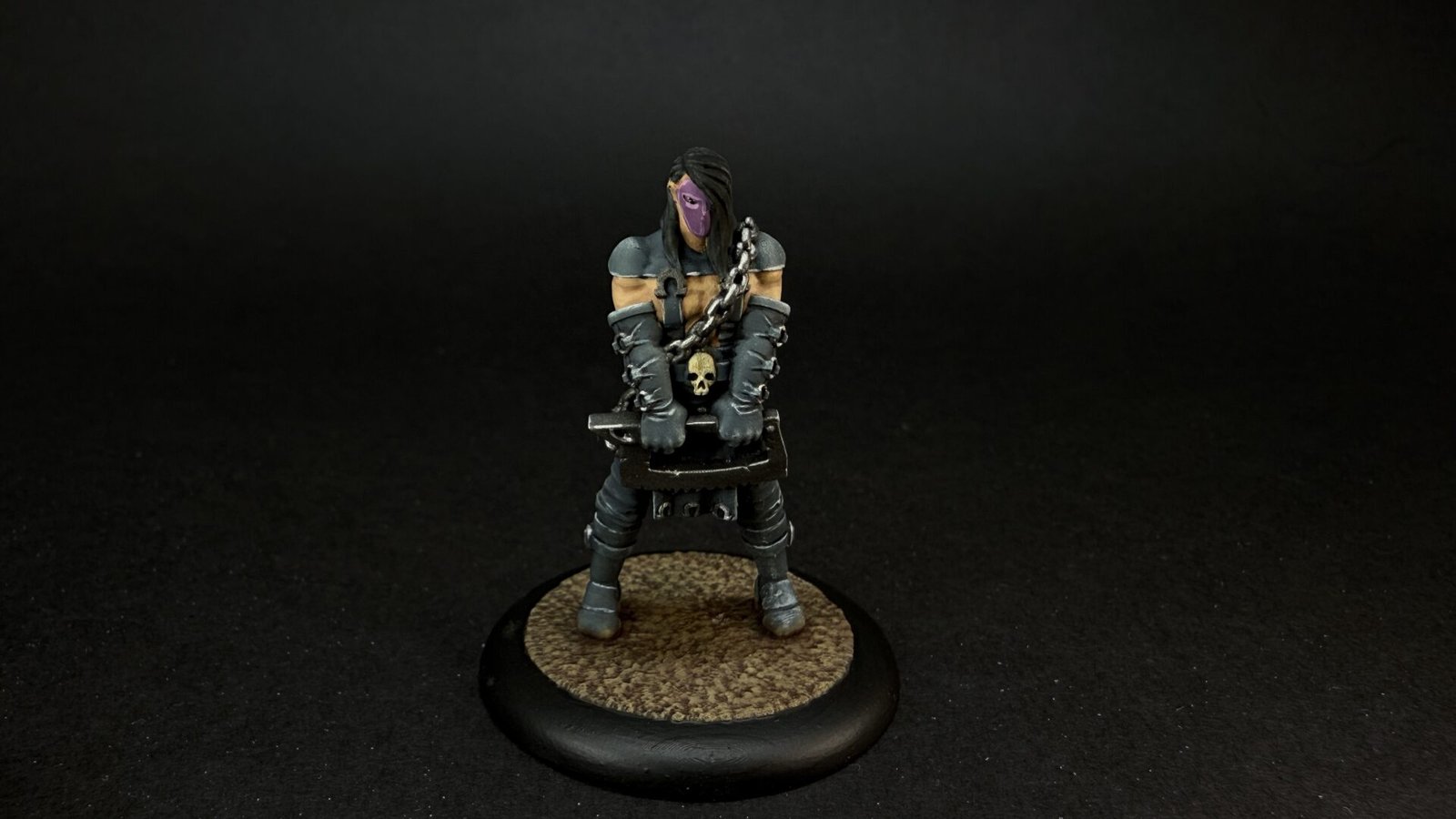
It just needs to be something fun that will reset my mojo and allow me to crack on with lot’s of other projects throughout the year. In the meantime it’s back to the morticians so what do you think of the brooding menace that is Ghast.
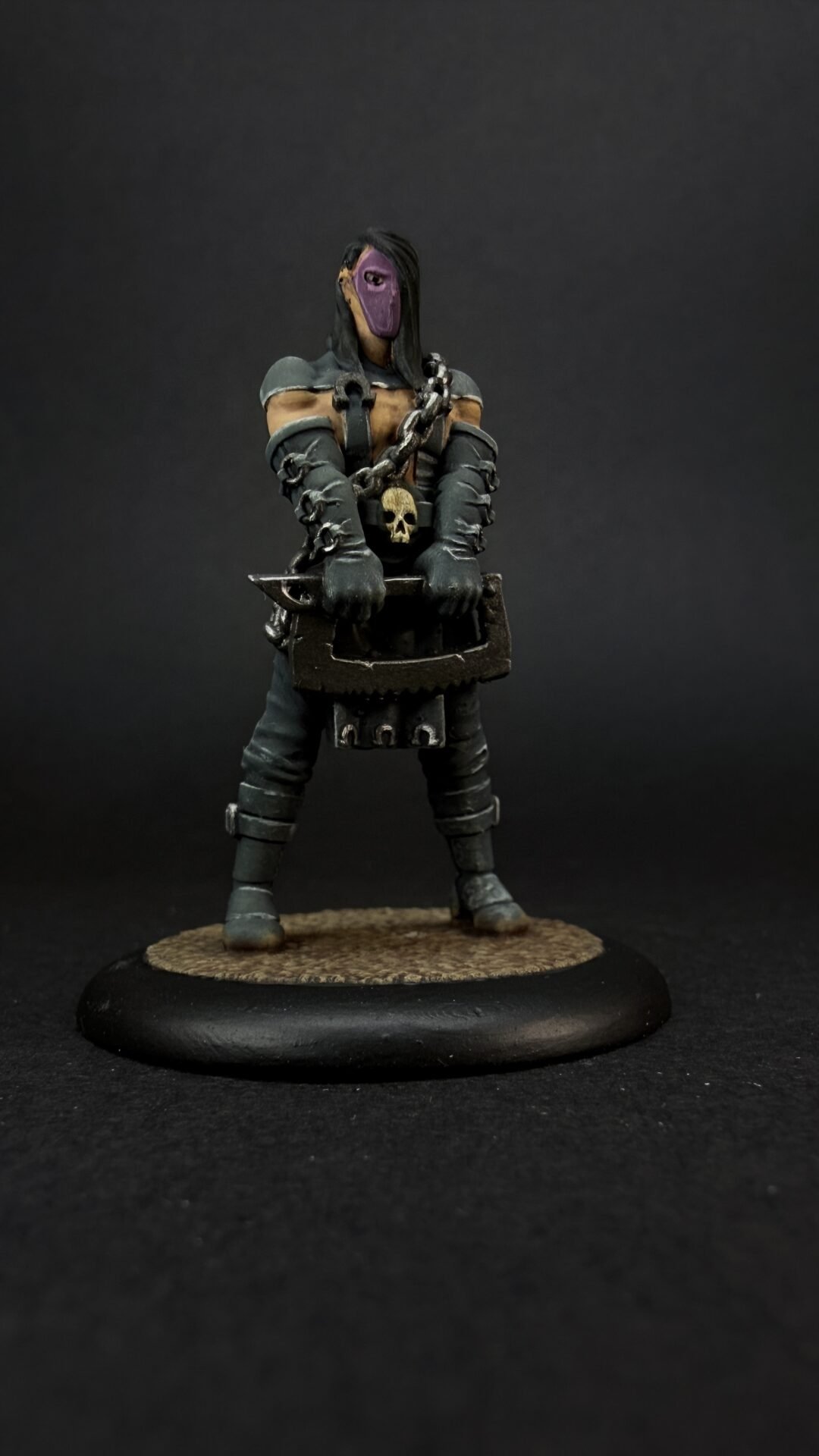
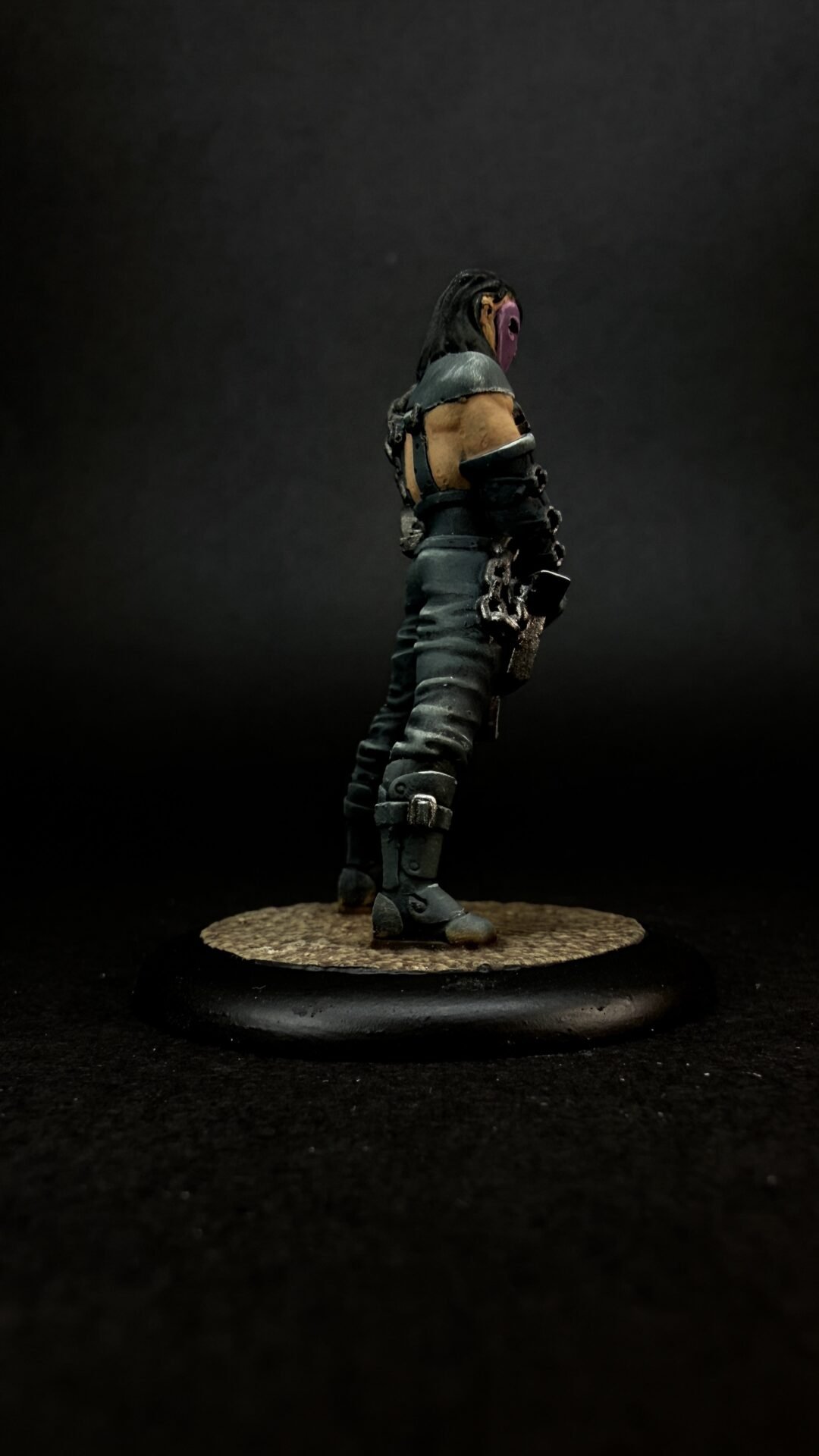
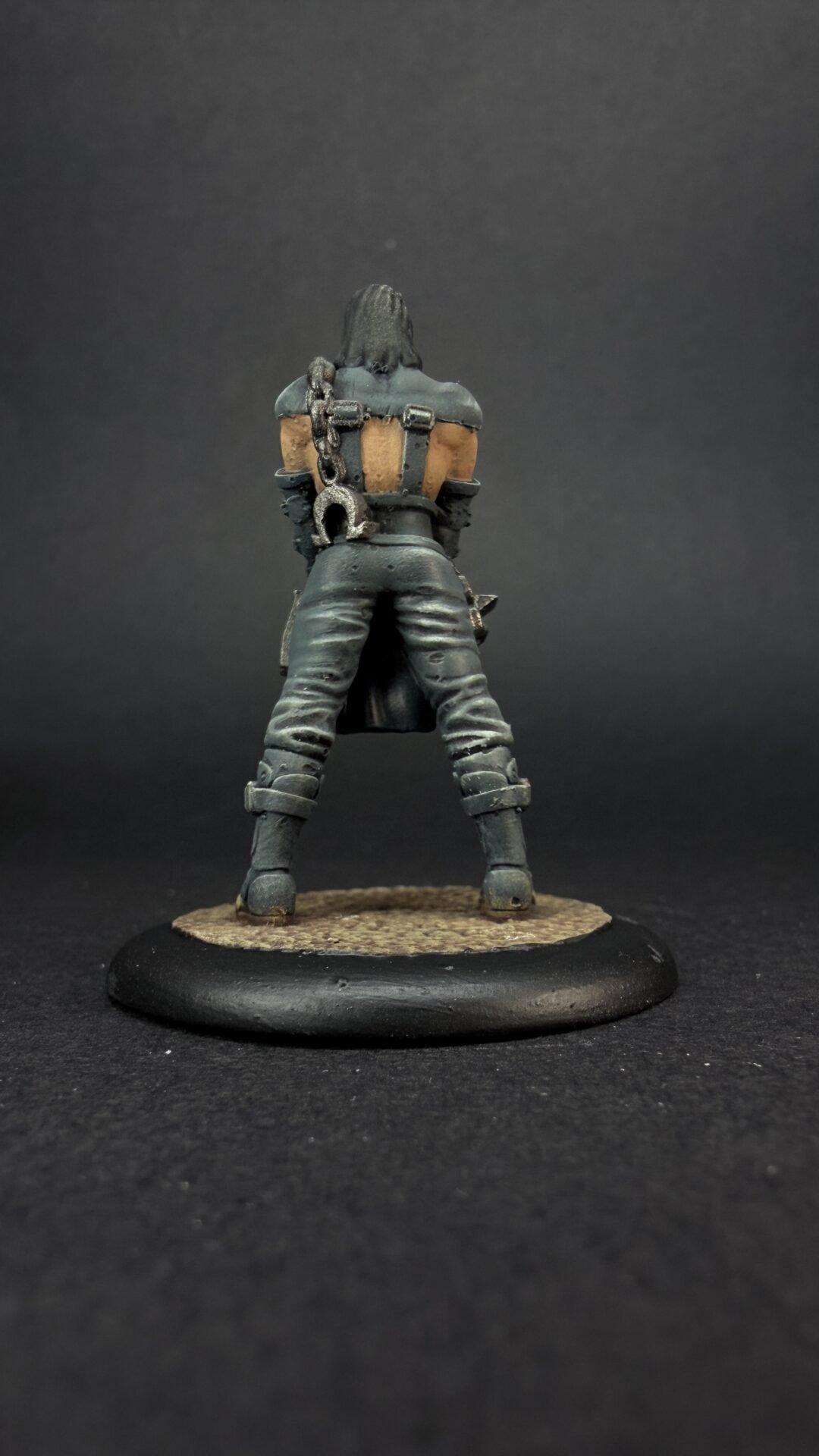
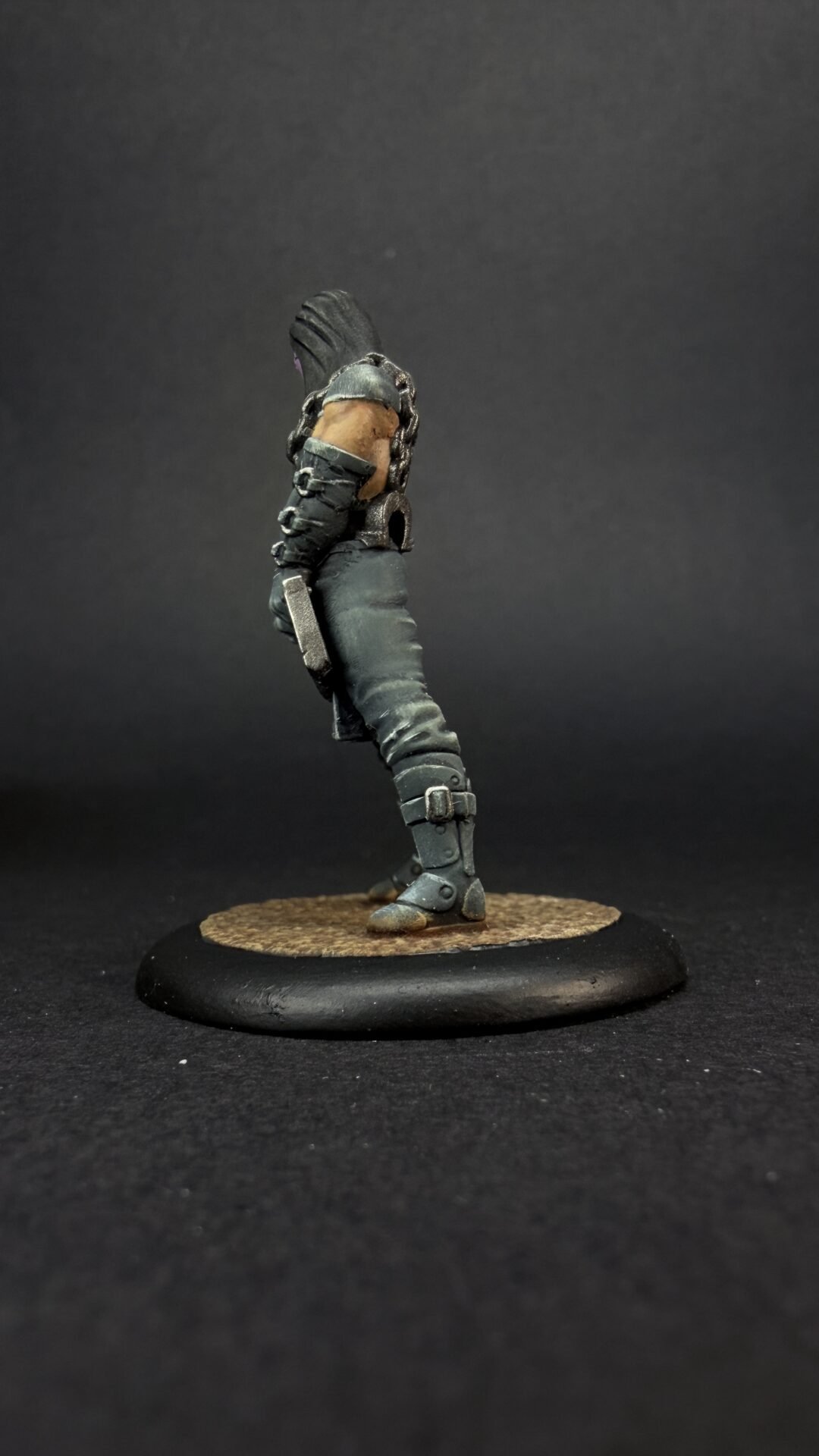
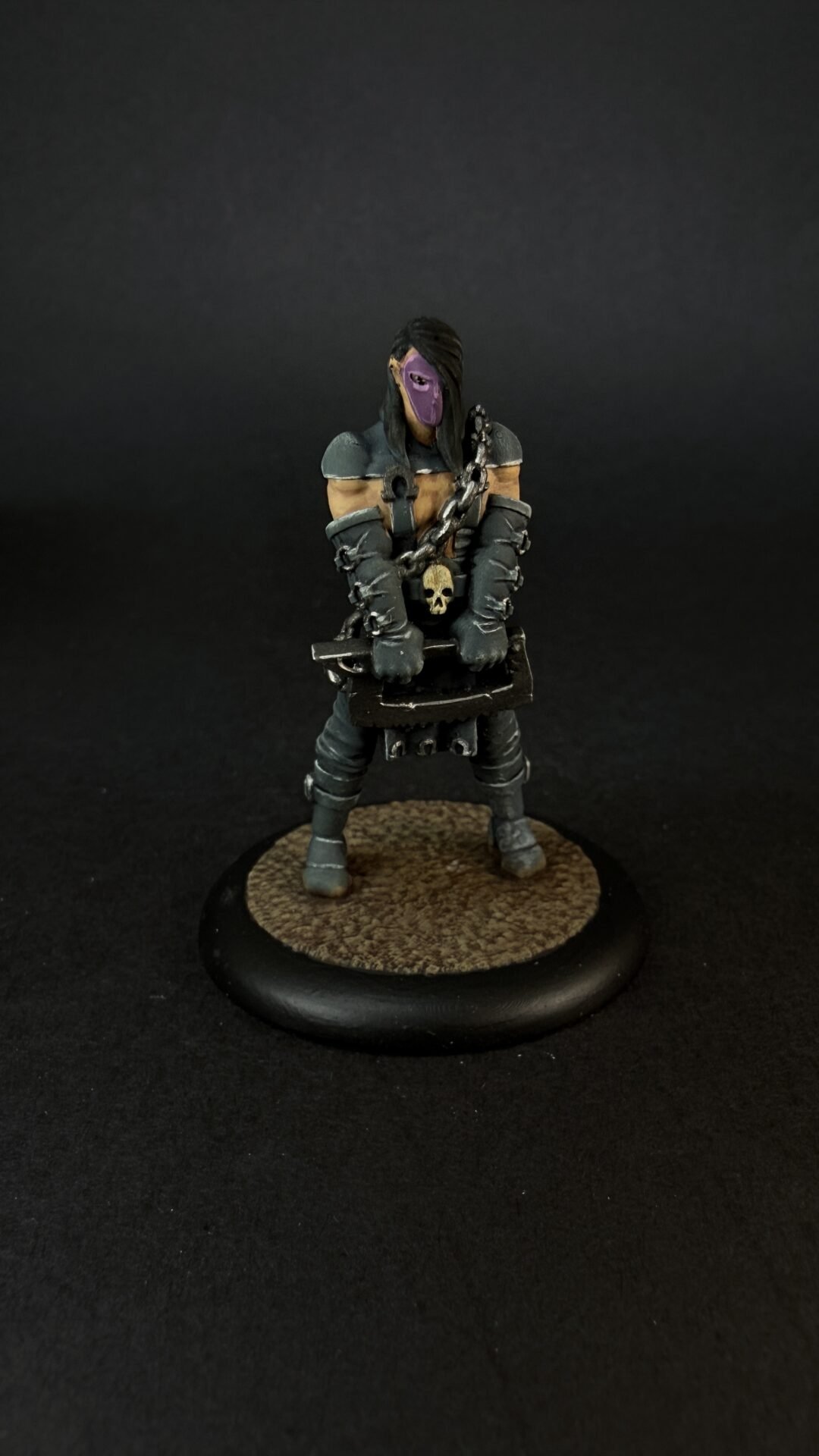
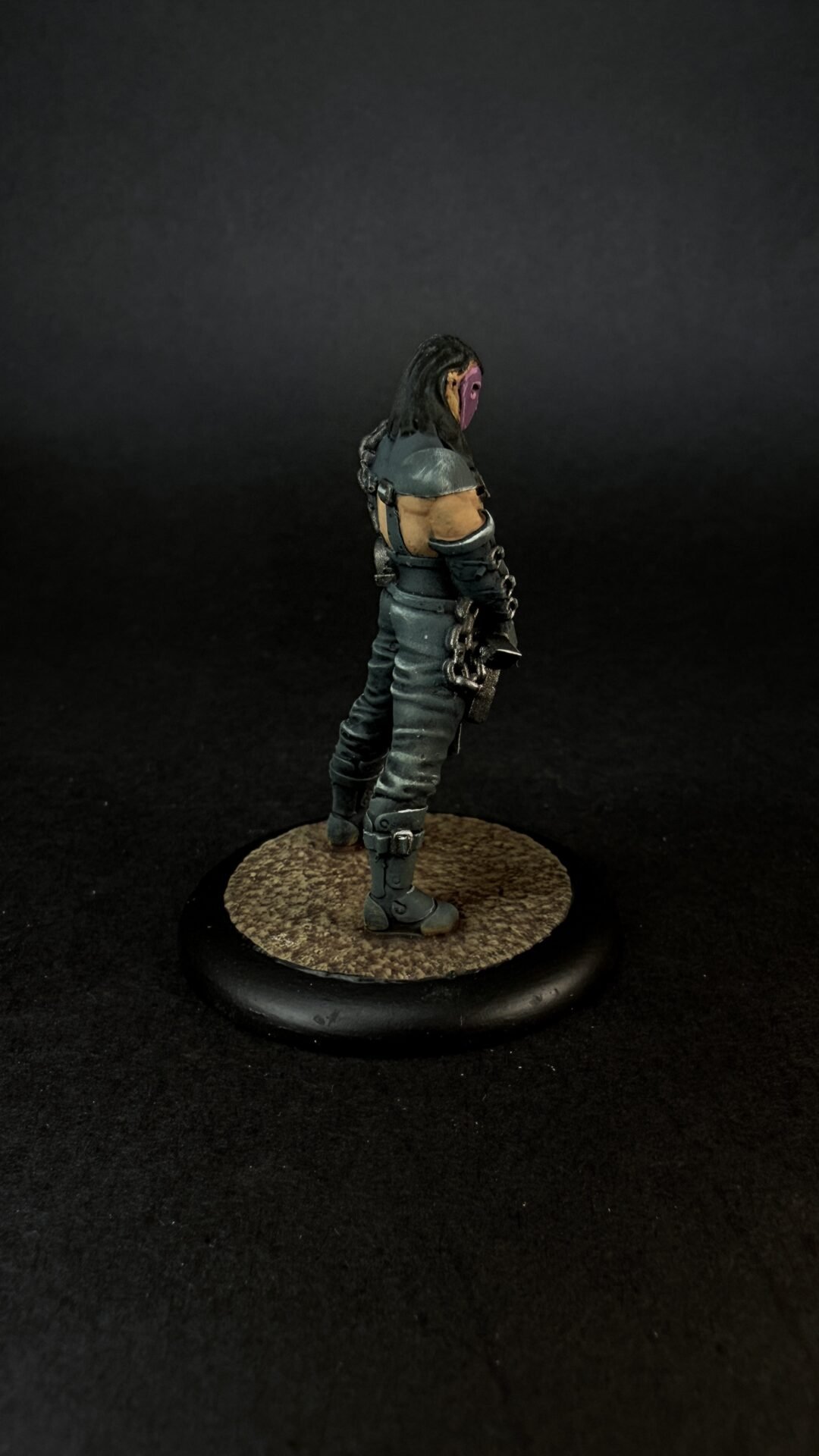
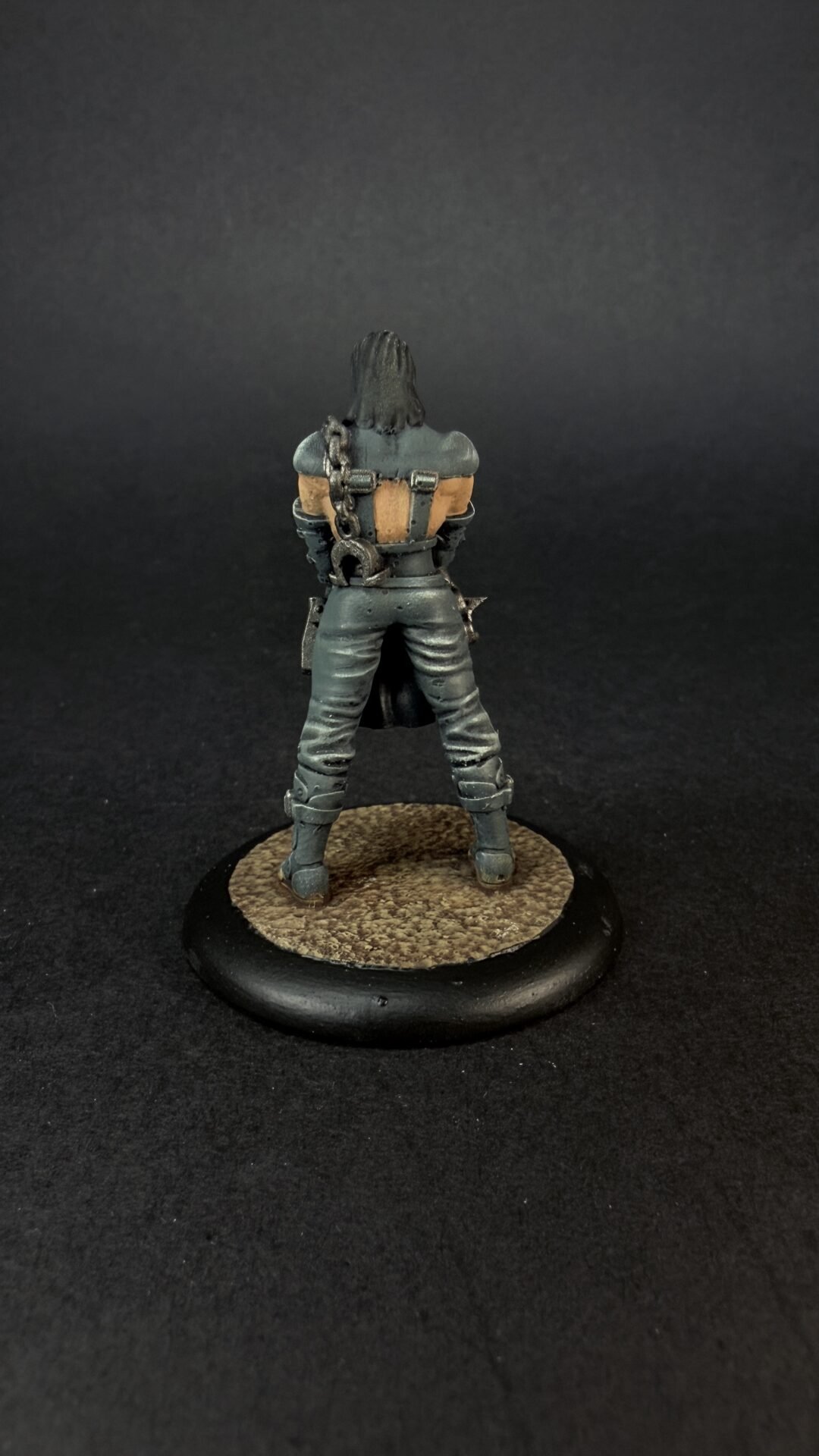
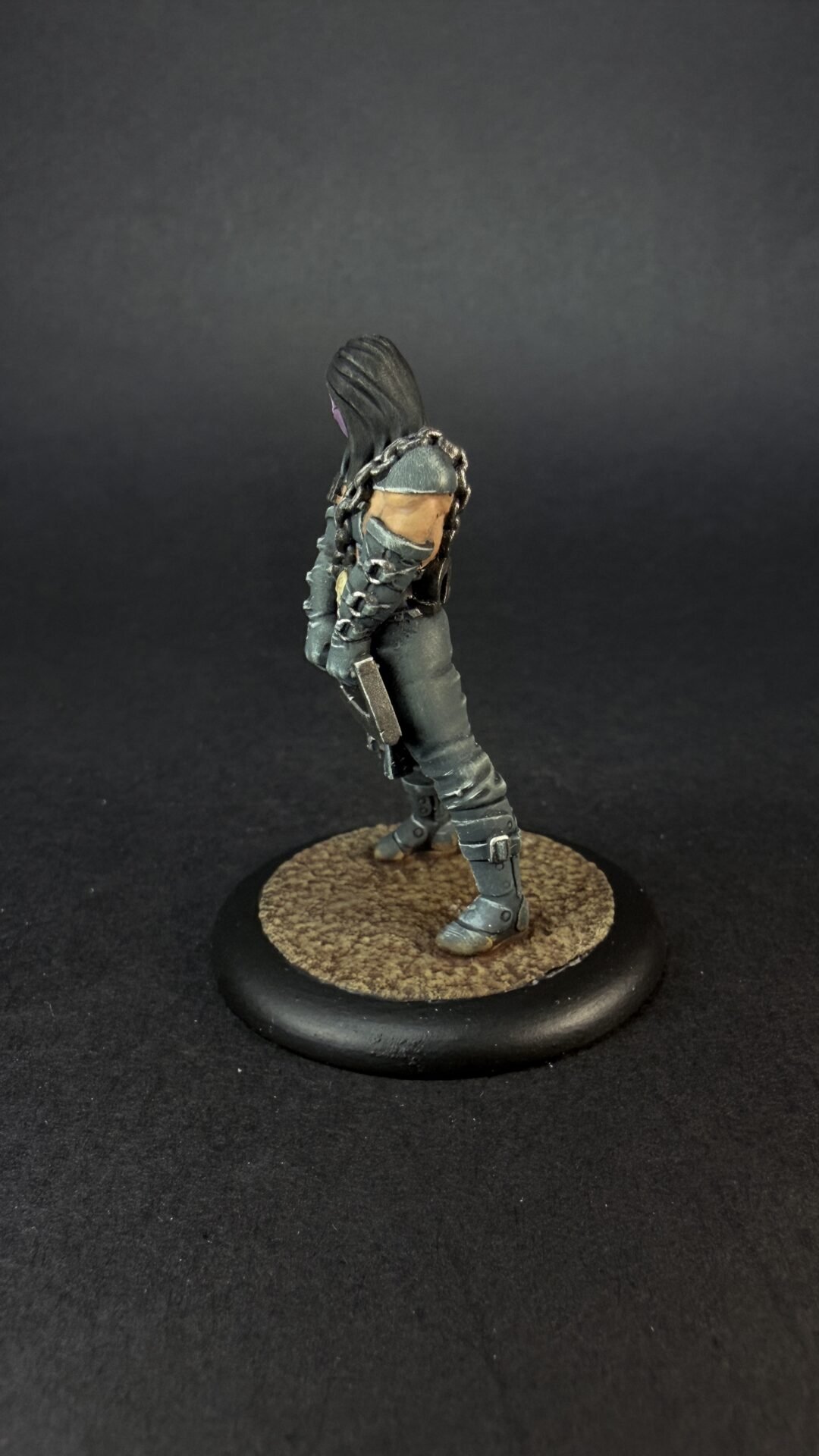
You can see more Guild Ball miniatures at my gallery here
In game terms we all know that every team needs a heavy. Someone big enough that, when they walk onto the pitch, everyone else suddenly remembers a very important appointment on the opposite side of the field. The Butchers have Boar, the Brewers have Stave, and the Morticians? They’ve got Ghast.
Ghast is what happens when you take the Morticians’ love of fear and control, wrap it in a seven-foot-tall slab of muscle, and give him a giant executioner’s axe. Subtle? Not really. Effective? Oh, absolutely.
Today we’re going to take a stroll (well, a nervous tiptoe) into Ghast’s territory, lore, pitch presence, and why he’s the kind of player that makes opponents mumble darkly into their dice.
Unlike Obulus or Silence, Ghast isn’t subtle. His story isn’t about whispers in dark rooms or pulling strings from the shadows. No, Ghast is fear given form.
In the fiction, Ghast is presented as a towering, masked enforcer, an executioner whose job is not to convince you with words, but with the promise of imminent violence. He’s the shadow that falls across your cell when the guards open the door, the figure you glimpse when you realise the Morticians aren’t here to negotiate.
And yet, he isn’t just a mindless thug. There’s tragedy buried in his background, hints of a man broken down and remade into this terrifying presence. That humanity makes him all the more unnerving, he’s not a monster, he’s a man who became one.
The Morticians thrive on psychology, and Ghast is psychology in its rawest form. He doesn’t need to say anything. His existence is the message.
Now, onto the meat of it, and there’s a lot of meat to cover. Ghast is one of the Morticians’ most straightforward models to understand, but that doesn’t make him any less dangerous.
He has some serious options in his took kit starting with Knockdowns for Days. This is a nightmare for enemy strikers and dodgy models. His ability to hand out knockdowns with ease makes him a control piece par excellence. Once you’re on the floor, you’re not doing much except praying.
Next up we have Fear Aura, which is perhaps his most iconic feature. Ghast taxes enemy influence just by existing nearby, making him an anchor point for Mortician formations. Want to attack near Ghast? That’ll cost you extra.
But if his influence isn’t enough we have Big Damage Potential. While not as brutally efficient as a Butchers heavy, Ghast still hits hard. Left unchecked, he can remove models with that huge axe. And finally we have Durability, whist he’s not invincible, but he’s tough enough that opponents can’t just casually swat him aside. Dealing with Ghast takes commitment — and that means leaving yourself vulnerable elsewhere.
When it comes to play style Ghast fills a classic role, the enforcer. He’s the player you park in the middle of the pitch to say, “go on then, try it.” Zone Denial means his aura and knockdowns discourage enemies from entering certain areas. Then we look at how he can drain momentum for your opponents. He forces othem to spend more than they’d like to deal with him, reducing efficience. And last but not least he creates openings for the rest of the Morticians to capitalise on. A knocked-down striker is easy prey for Cosset, a repositioned target is perfect for Scalpel, and so on.
Ghast is at his best when he’s not just swinging the axe, but when he’s forcing the threat of the axe to shape enemy decisions.
Here’s the problem if you are playing against him, ignoring Ghast is usually a mistake. But focusing on Ghast? Also a mistake.
He’s designed to put you in a bind. Leave him alone, and he’ll knock down your key players, tax your influence, and generally make life miserable. Go after him, and you’ll spend so much time, effort, and momentum just trying to bring him down that the rest of the Morticians will be dancing on your grave.
The trick is balance. Keep him controlled — push him away, dodge out of his zones, chip him down when convenient — but don’t get obsessed. Ghast wants you to obsess. That’s how the Morticians win.
Ghast reminds me of that one person in every gaming club. You know the one. Big, quiet, usually wearing a hoodie that’s two sizes too big. Doesn’t say much, but when they do, it’s always worth listening to.
In casual games, they’ll sit back and smile quietly while everyone else squabbles. But the moment you make the mistake of underestimating them, they’ll roll up with some unholy combo and flatten you.
Ghast is that player, but on the pitch. He doesn’t need to boast. He doesn’t need to preen. He just shows up, blocks out the sun, and suddenly everyone’s nervous.
Ghast is the Morticians’ wall of muscle and fear, the brute force that makes their psychological warfare all the more effective. He’s not subtle, but he doesn’t have to be. His mere presence changes the way opponents play.
On the pitch, he’s a zone-denial monster, a knockdown machine, and a walking influence tax. In the lore, he’s the executioner made flesh, the terror that proves the Morticians don’t just whisper about death, they enforce it.
If Obulus is the puppeteer and Scalpel the surgeon, Ghast is the guillotine. Simple, brutal, and utterly inevitable.
And on that note I’m going to wrap up for this week. I will be back again next week and I promise I’m nearly finished with the morticians so I will have something new for you soon. Until next week I hoe you all keep safe, and that all of hobby projects are a success.
You May Also Like
Weekly Waffle #409 – The Quiet Threat

What is Guild Ball