Weekly Waffle #427 – The Silent Storm: How to Build Asterix the Dual-Axe Barbarian
4th July 2026
The Mojo
For this week’s weekly waffle I have been at a conference for work so my hobby time has been very restricted. But I have done my best to make sure I have something for you. Now I’m not a football fan but it was quite a tense fare being in a pub full of fans watching England torture them with their performance. The one thing bout about being away has been that I have had some time on the train to write the update for you. And it’s turned into something of a bumper edition. Which I’m hoping may give me some credit because the next two weeks may result in slightly shorter updates. But I’ll save that for next week.
On The Work Bench
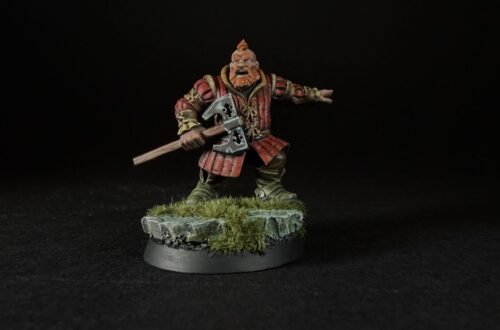
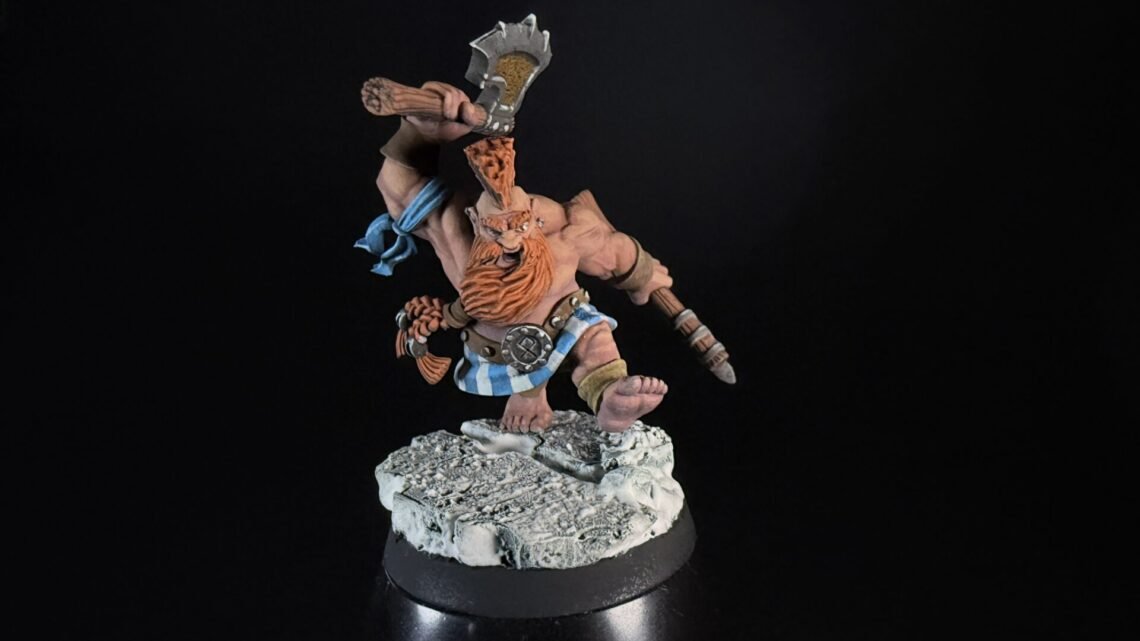
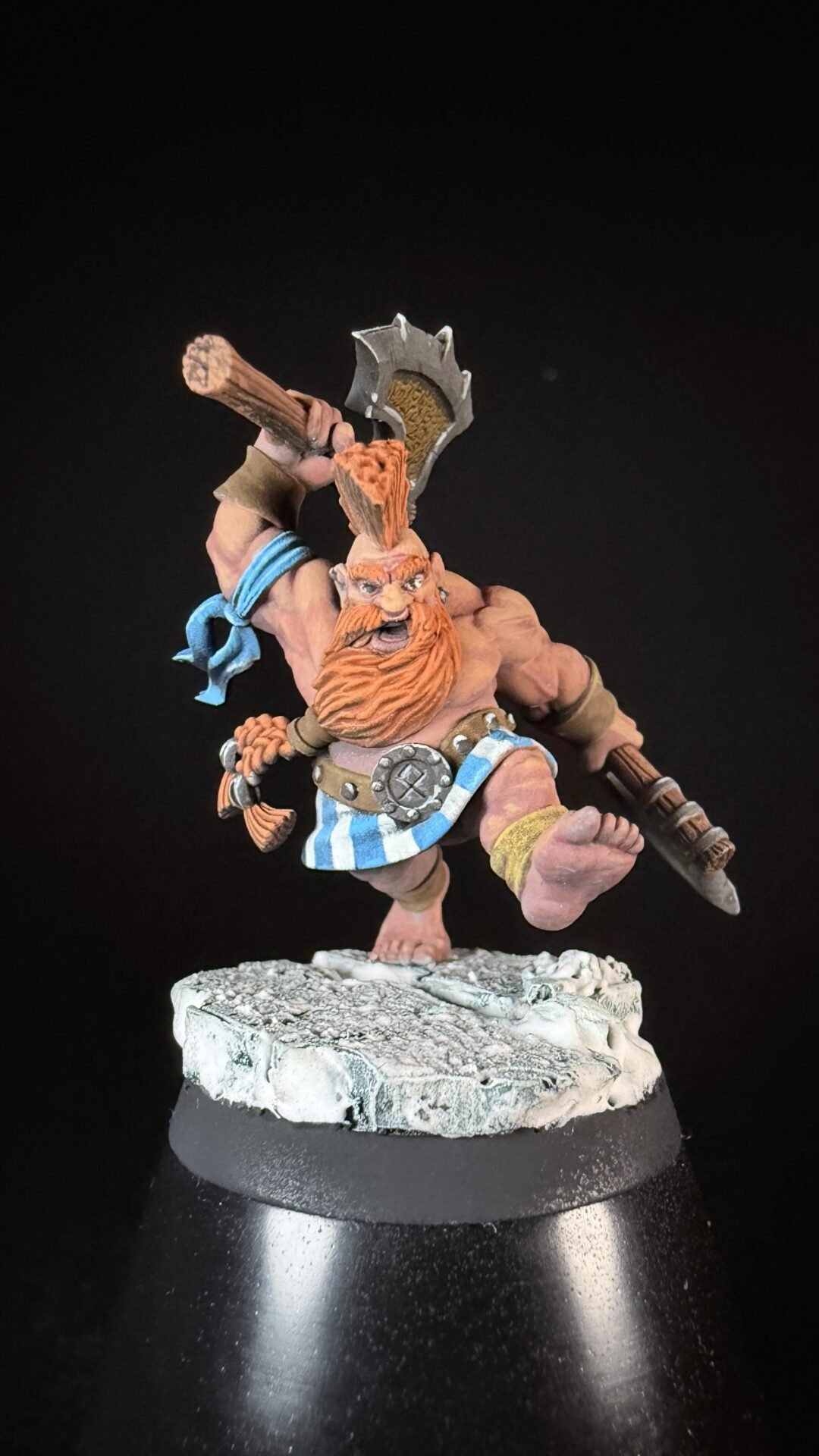
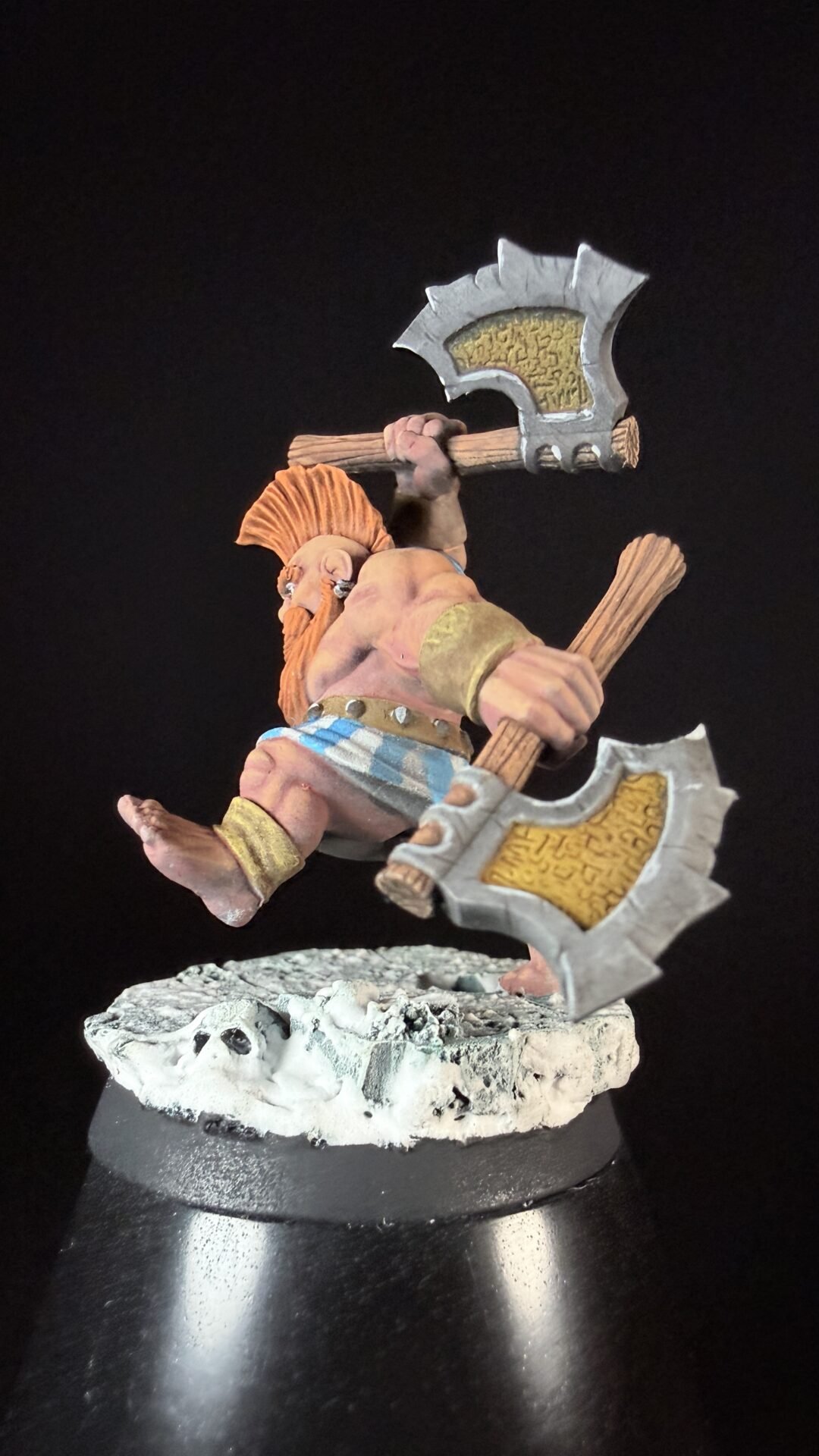
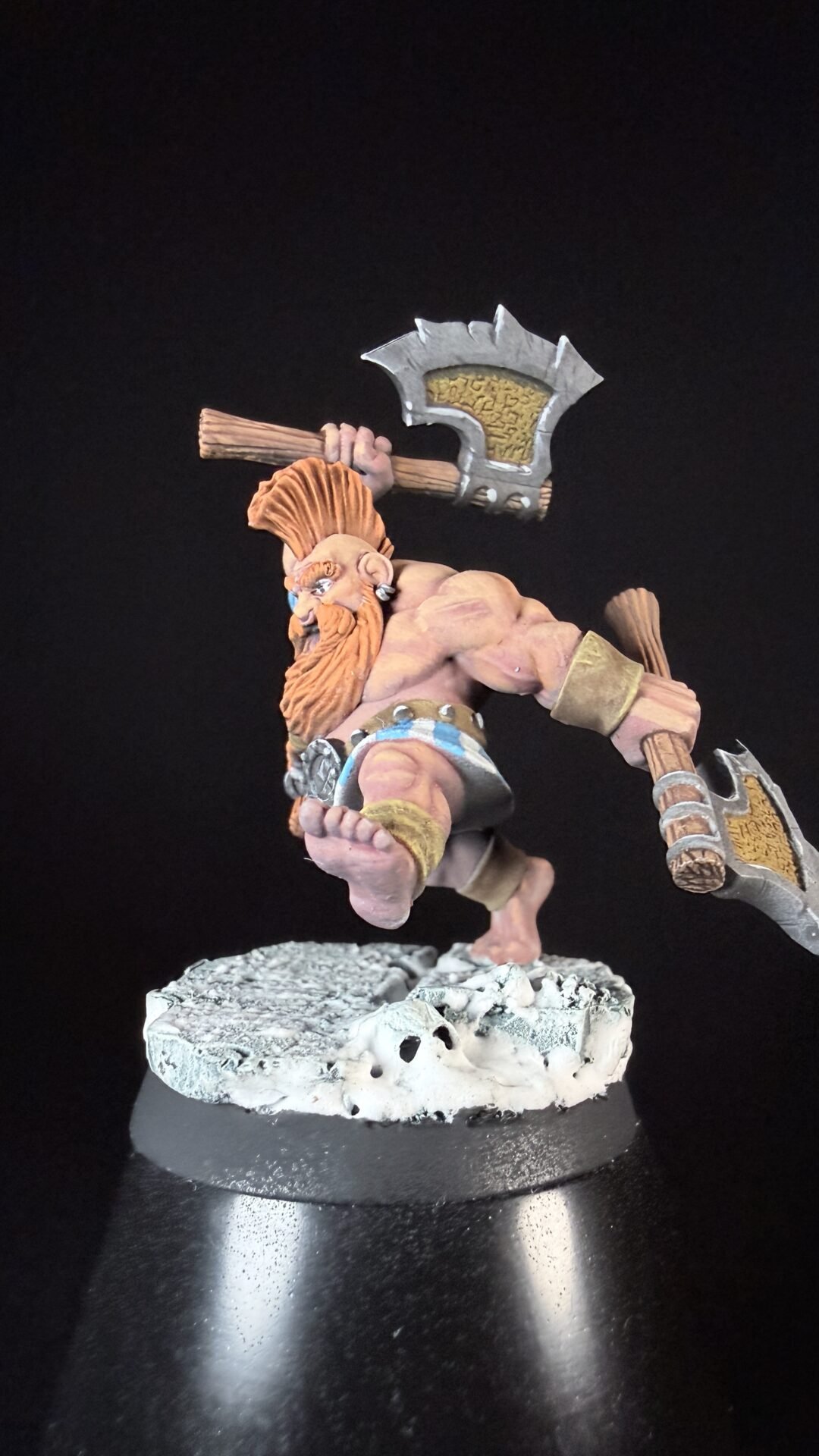
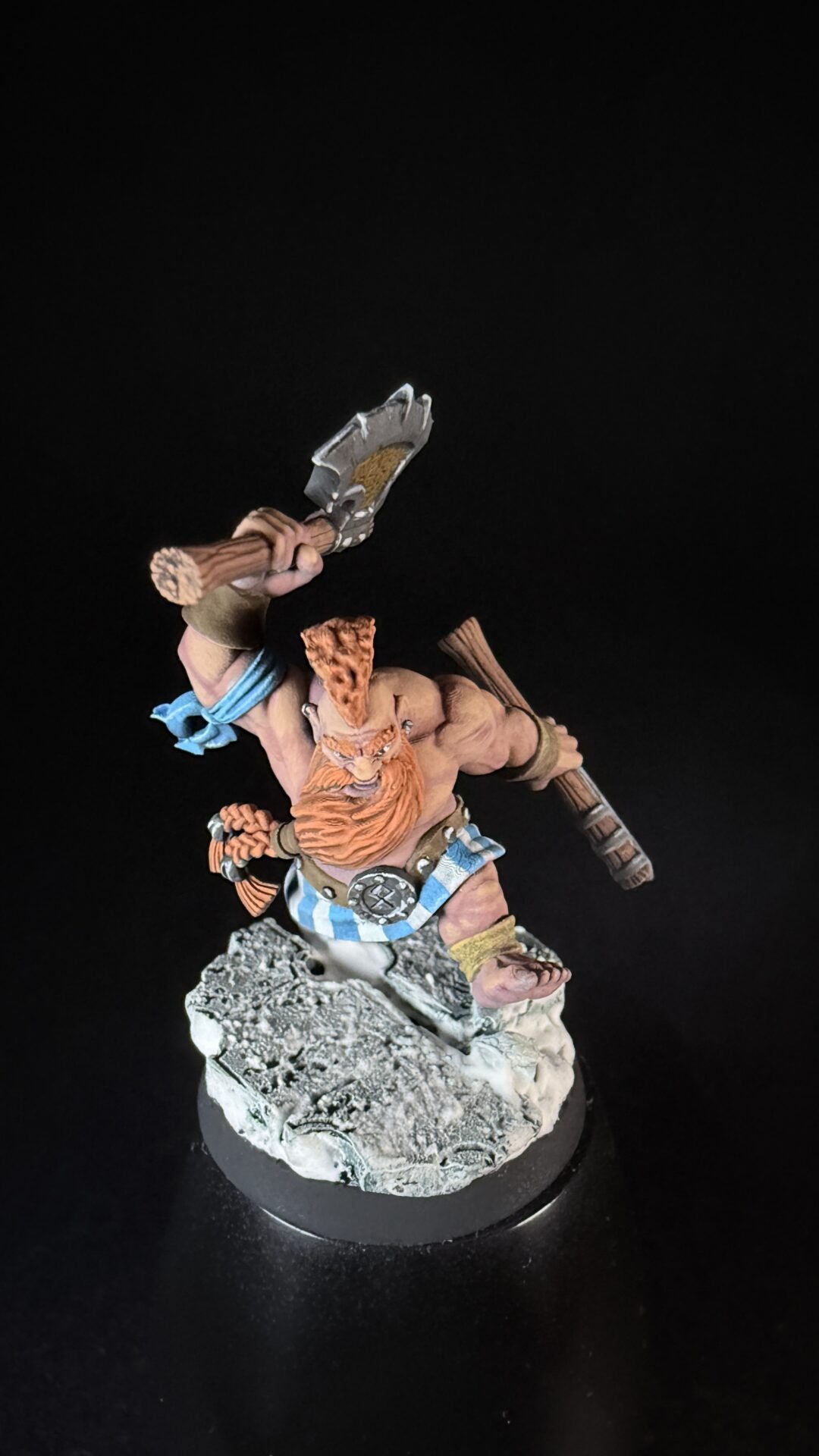
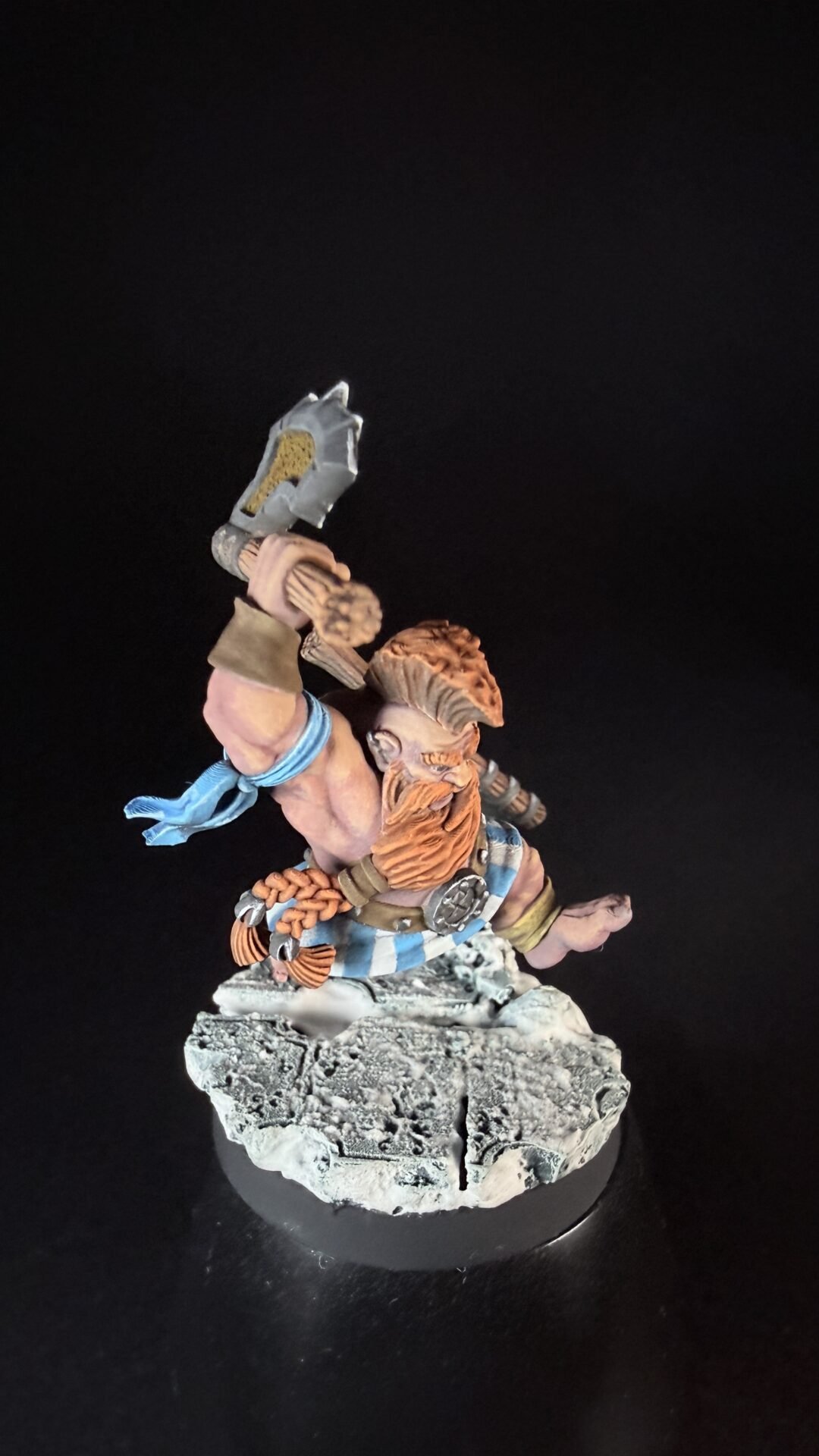
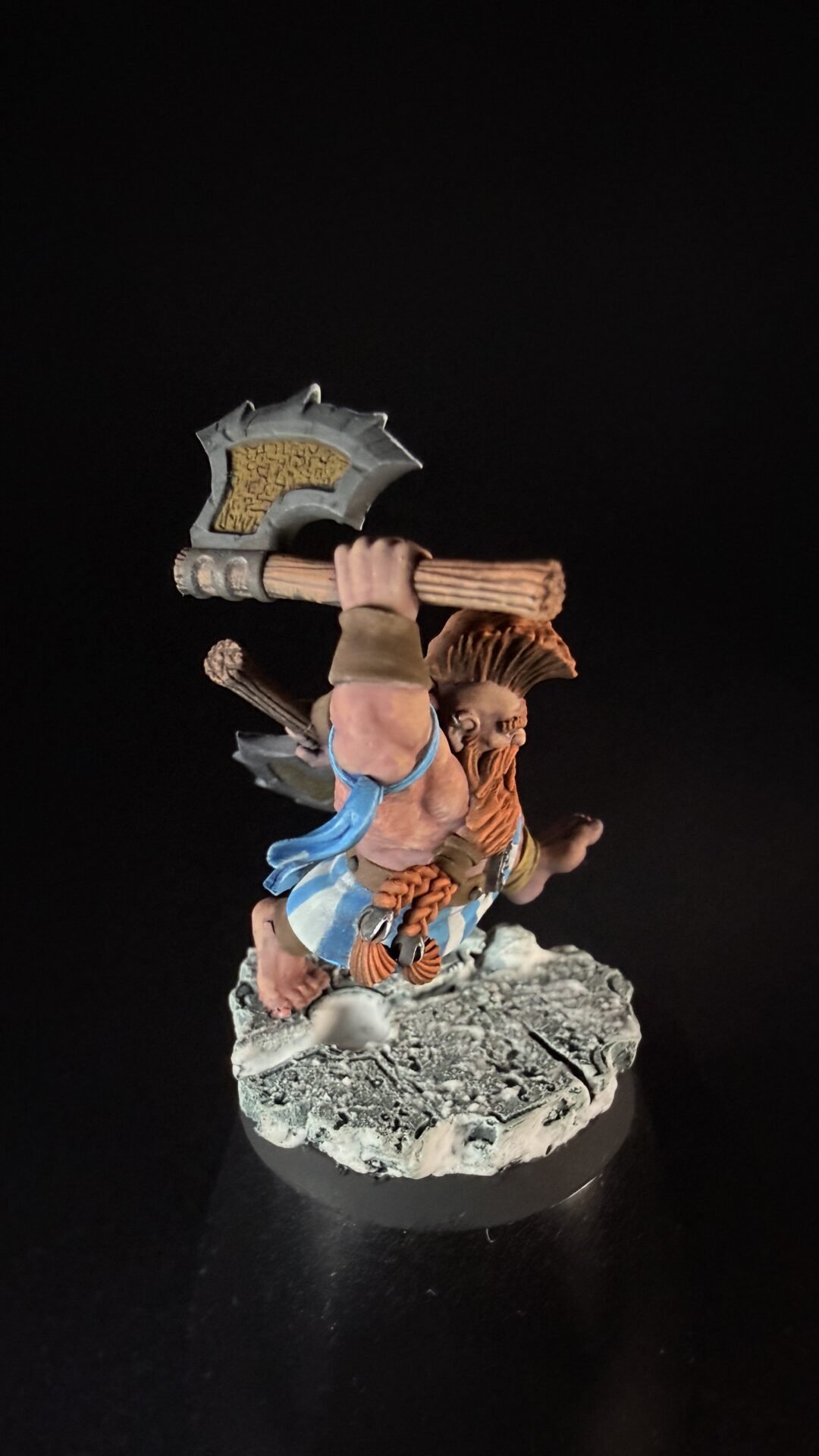
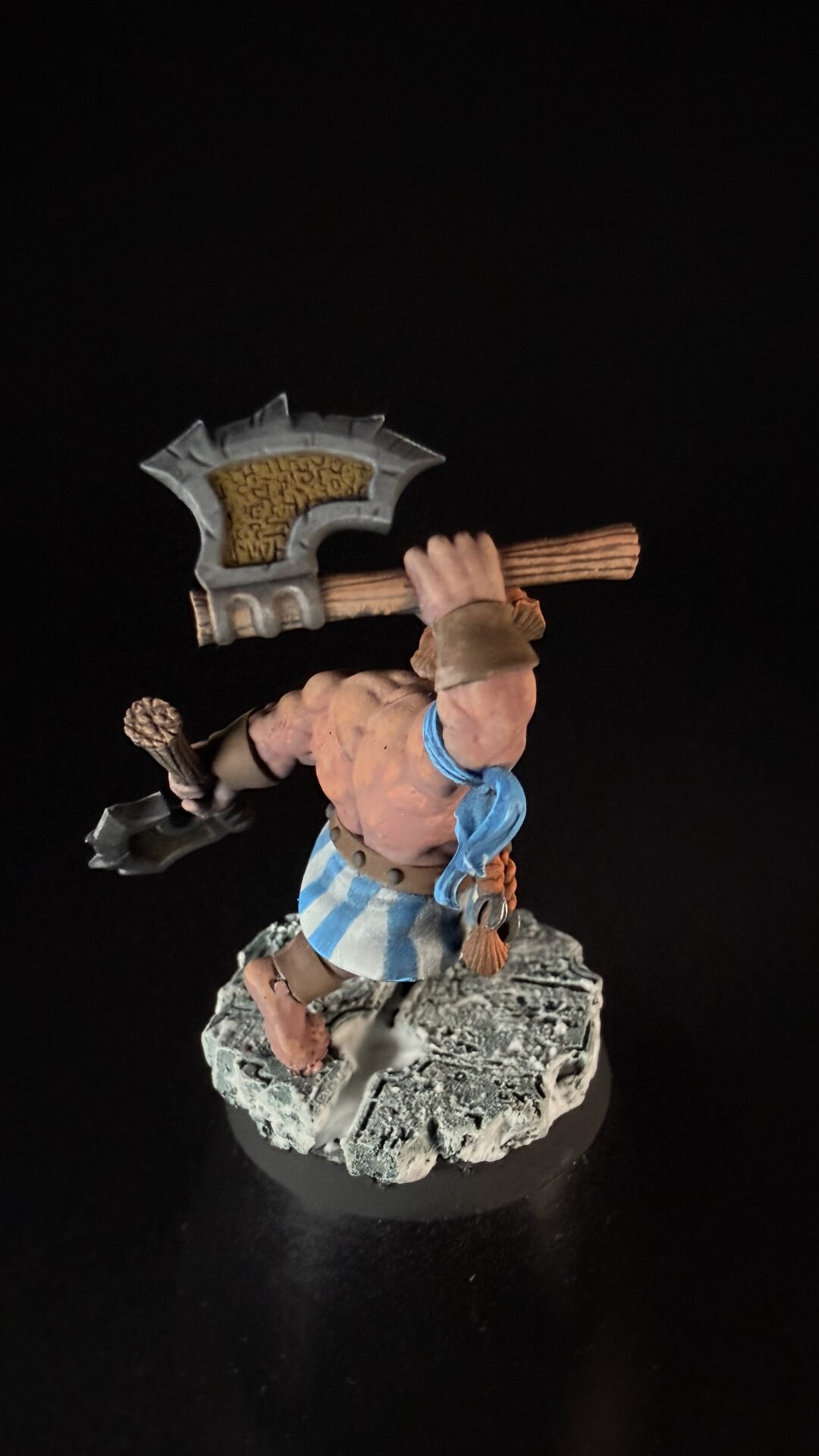
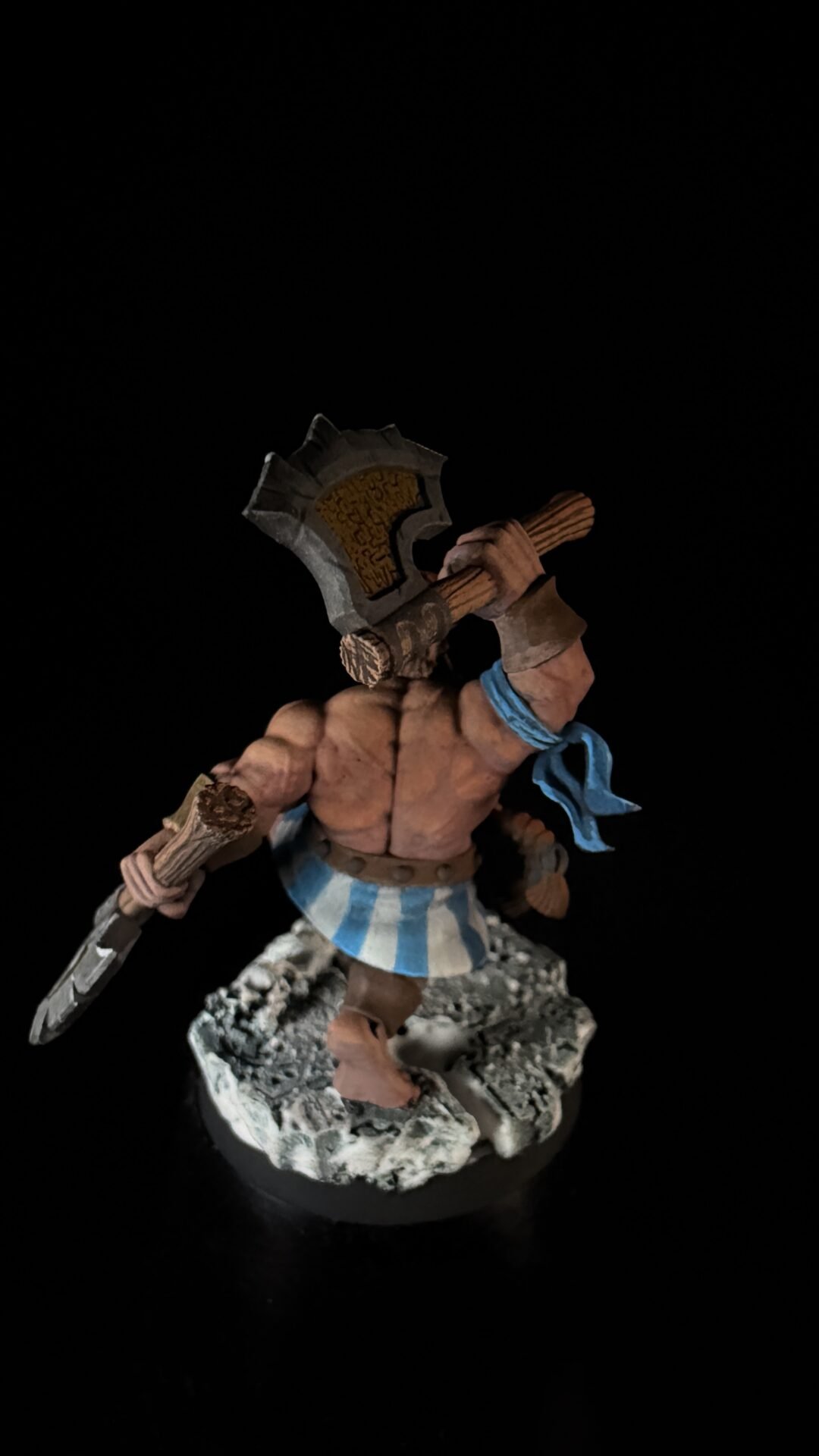
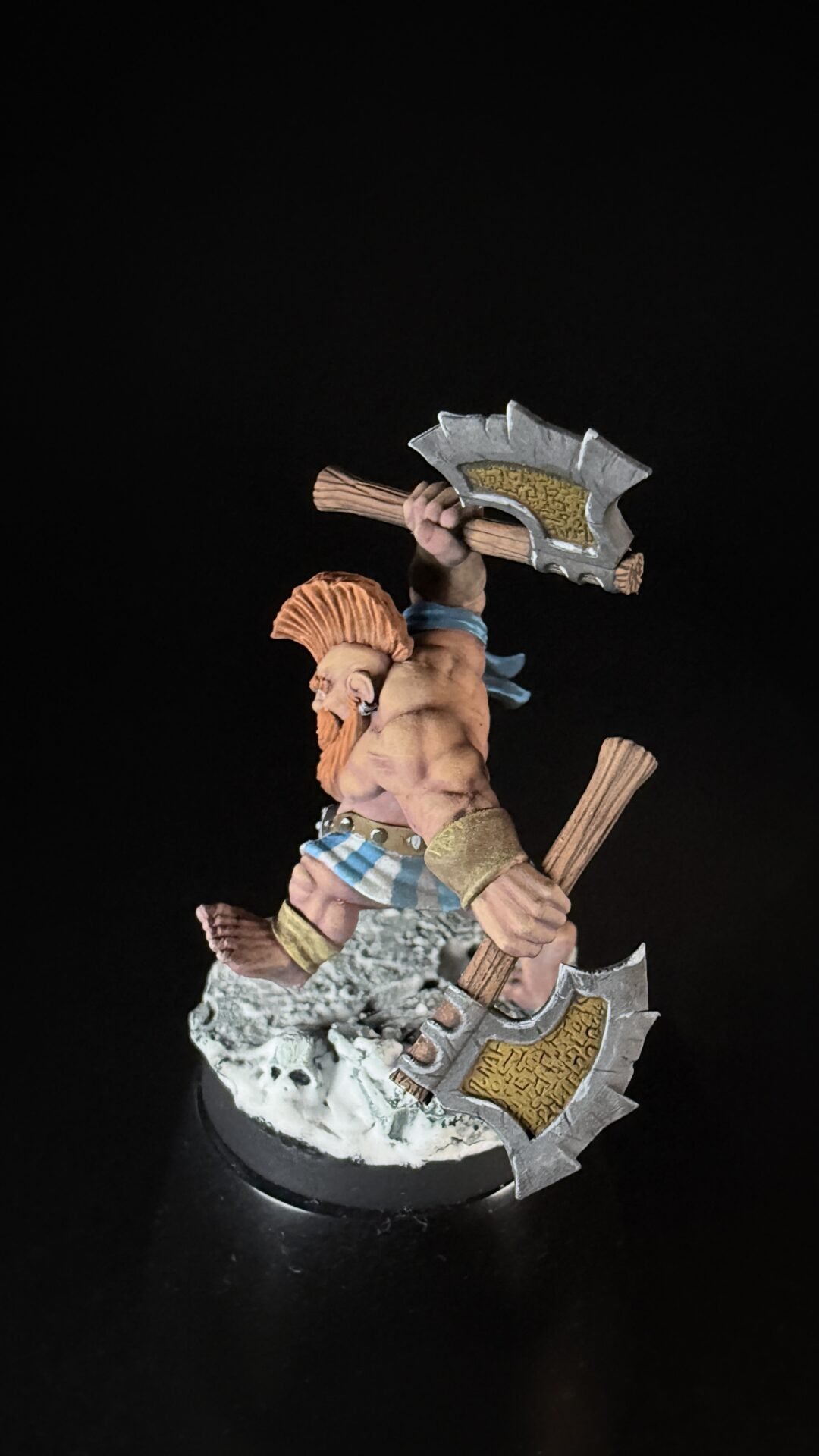
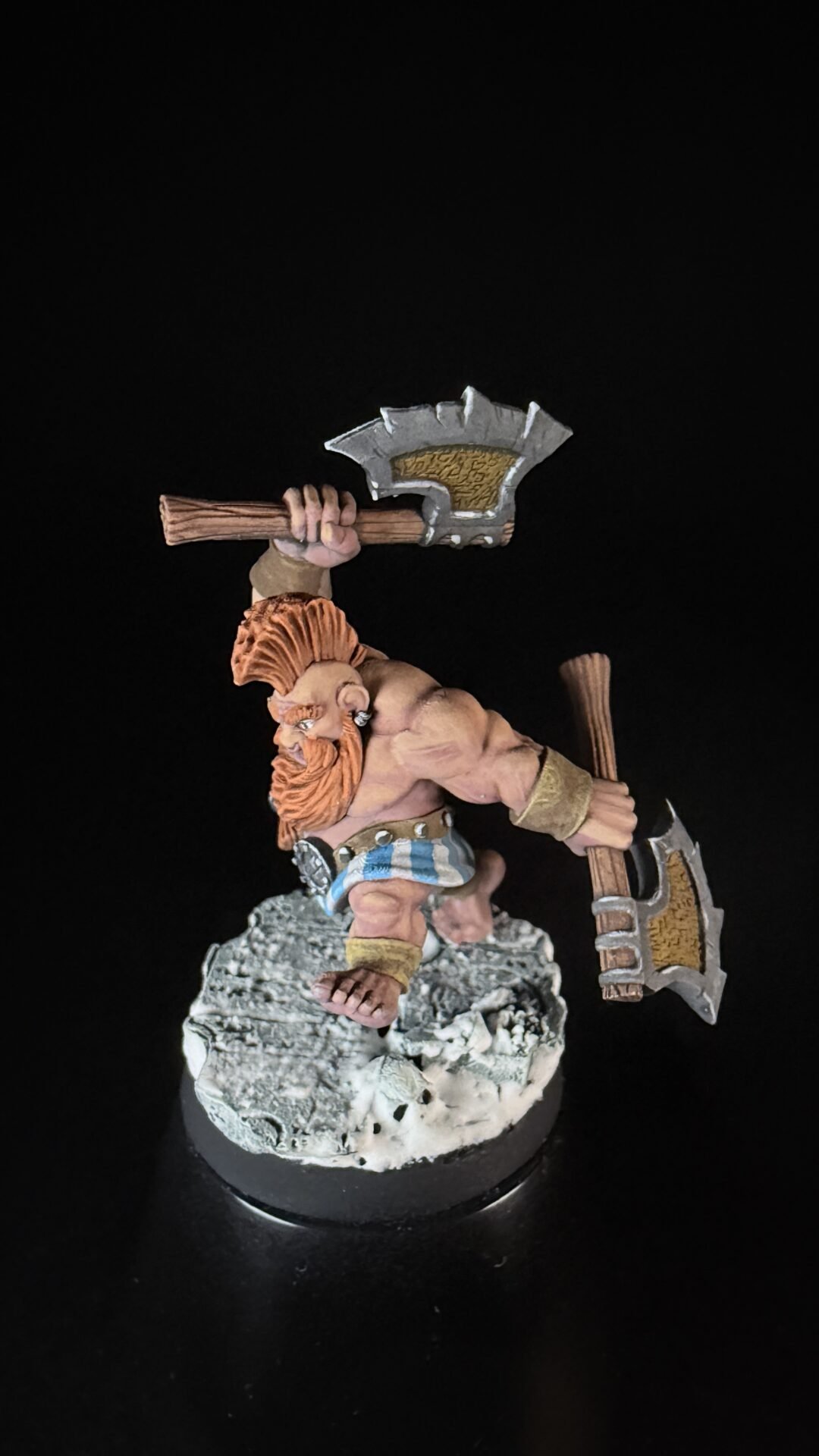
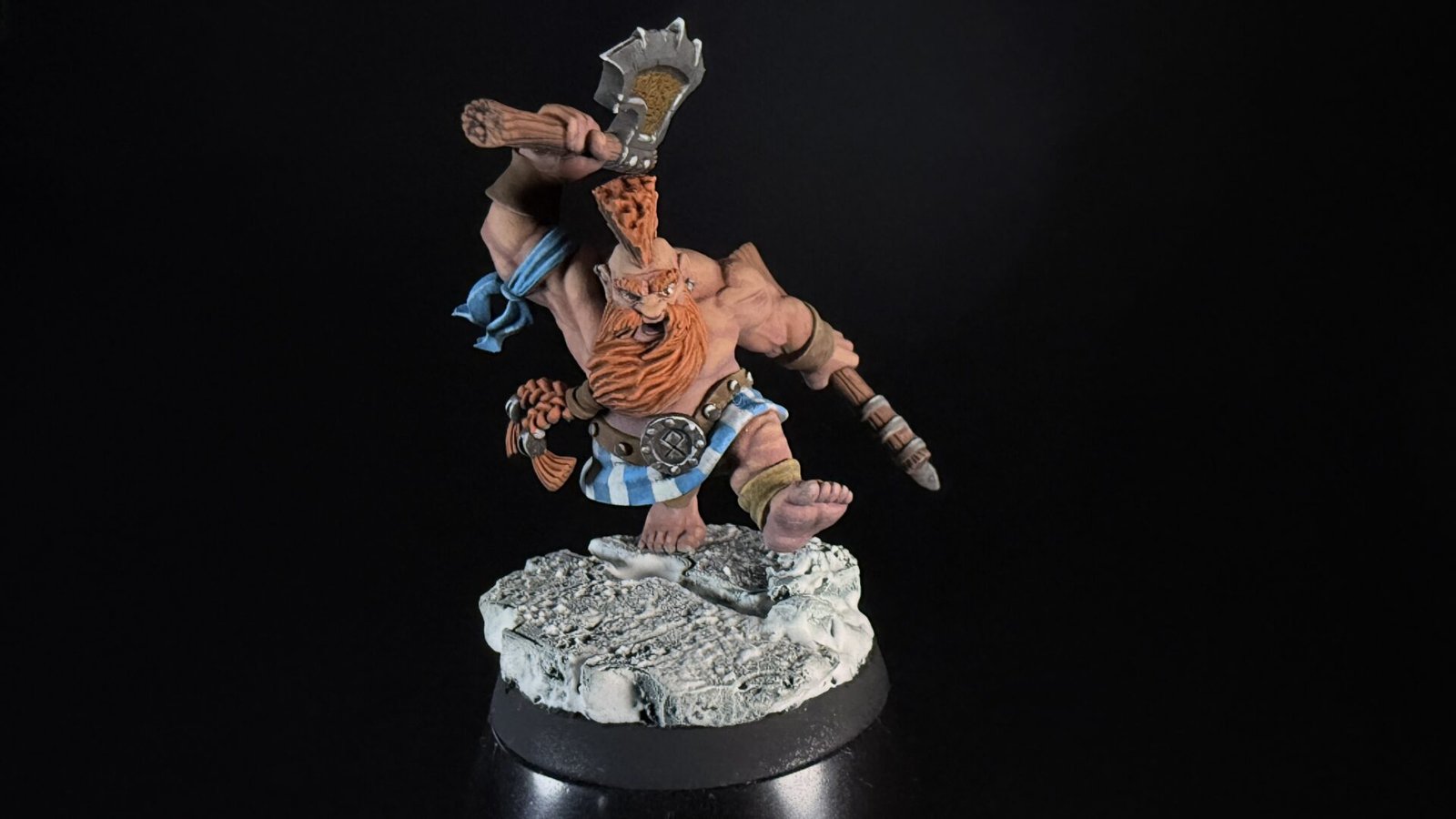
So on the workbench this week I have jumped back to a stand alone D&D style character. Just because the mojo for the Ptricians is just not there at the moment. I’m sticking with the Dwarves but this time i’ve gone for the classic outcast. The twin axe crazy boy, the berserker.
I really liked the look of the miniature and immediately had the idea to paint him in the style of Astrix. After having a play in ai-minianter I had my template and it was straight in with the painting.
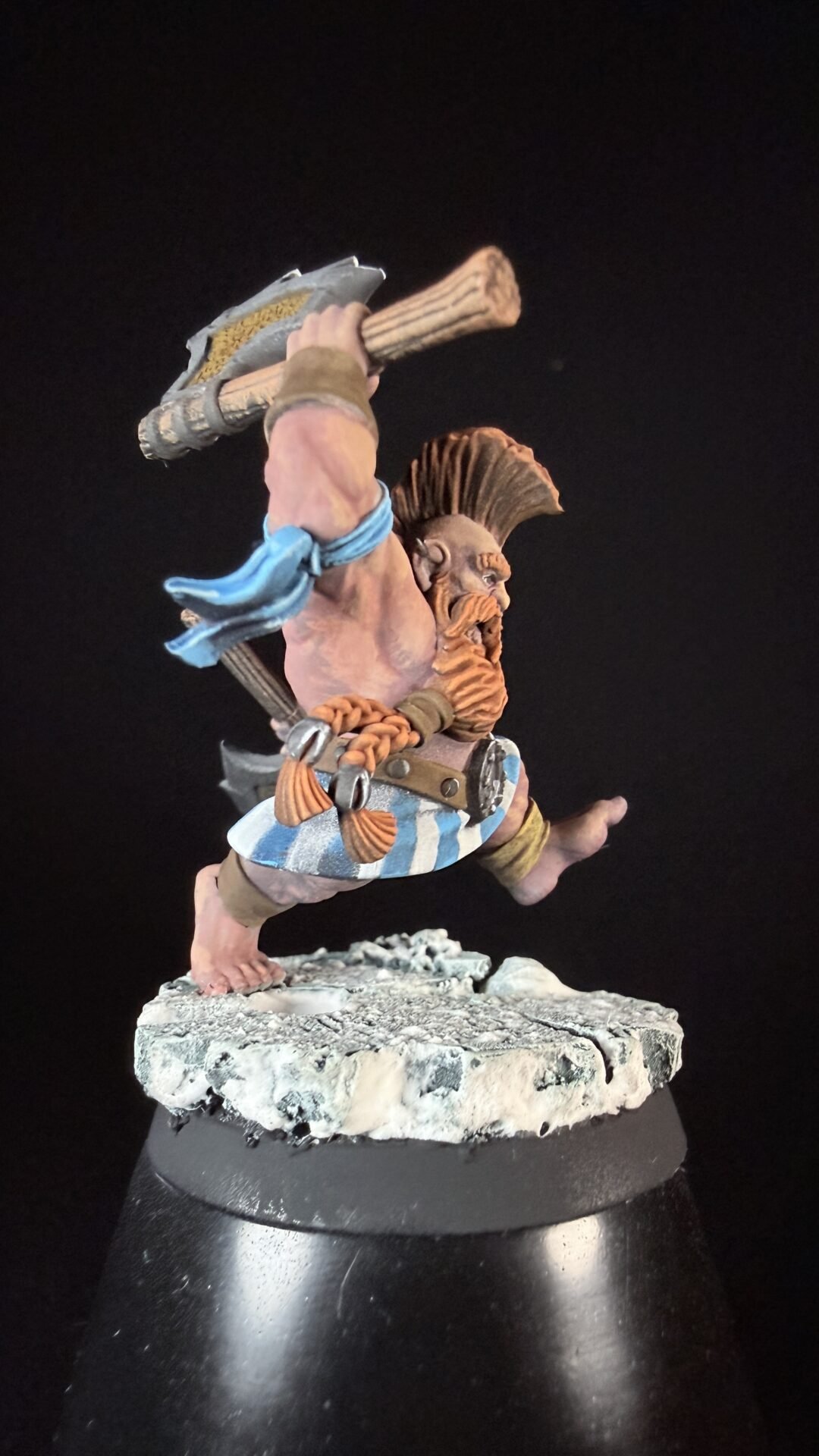
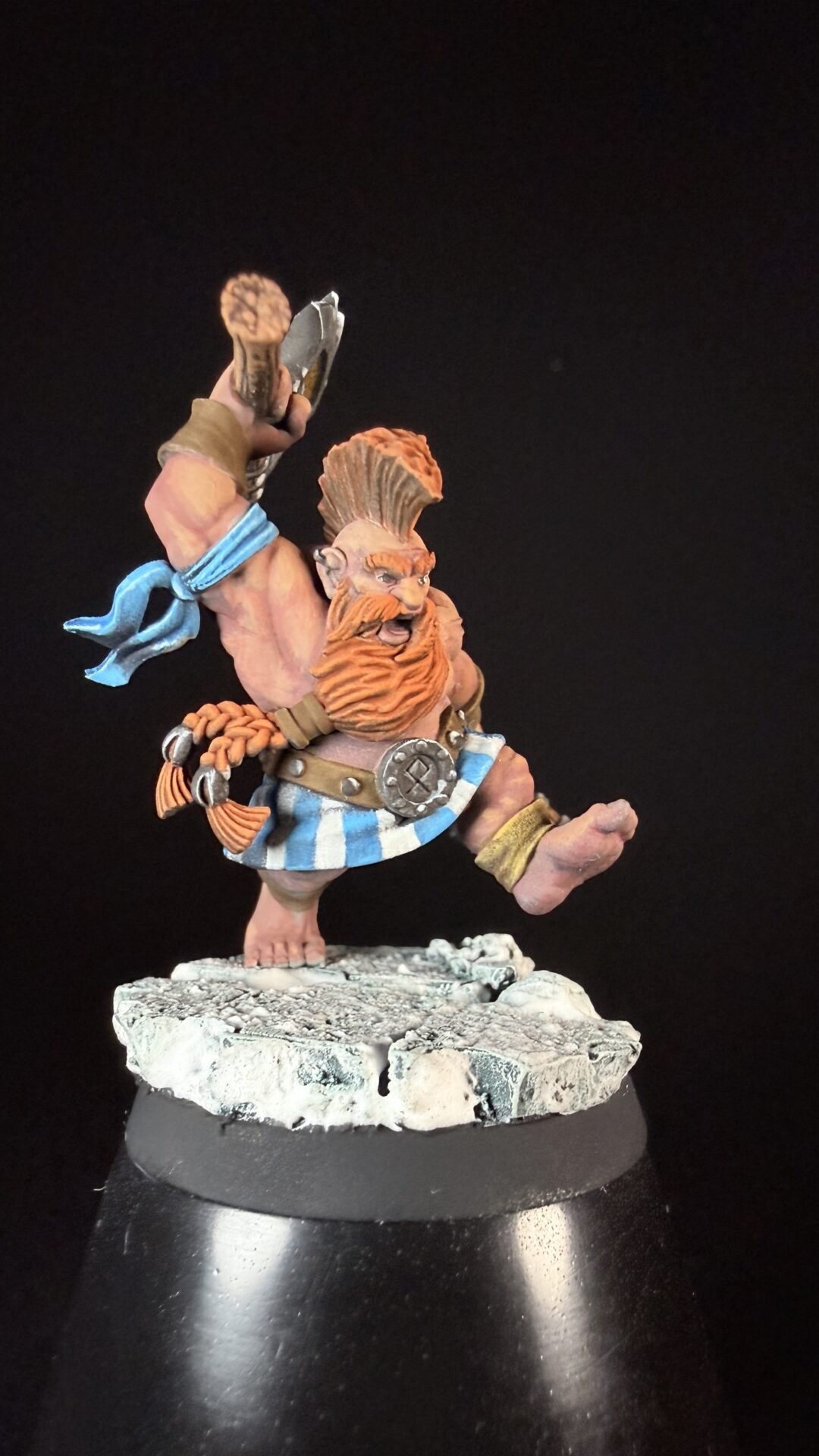
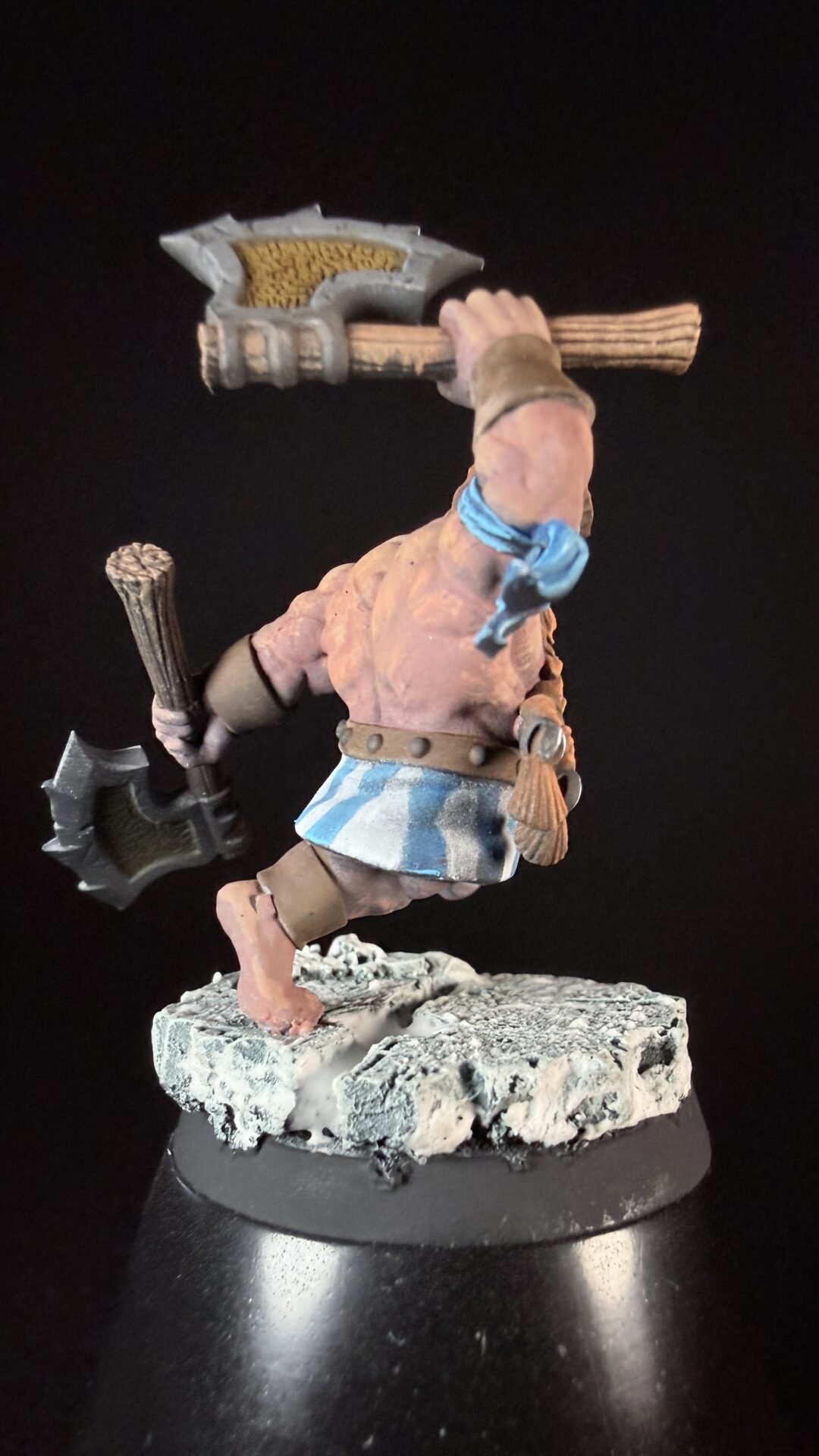
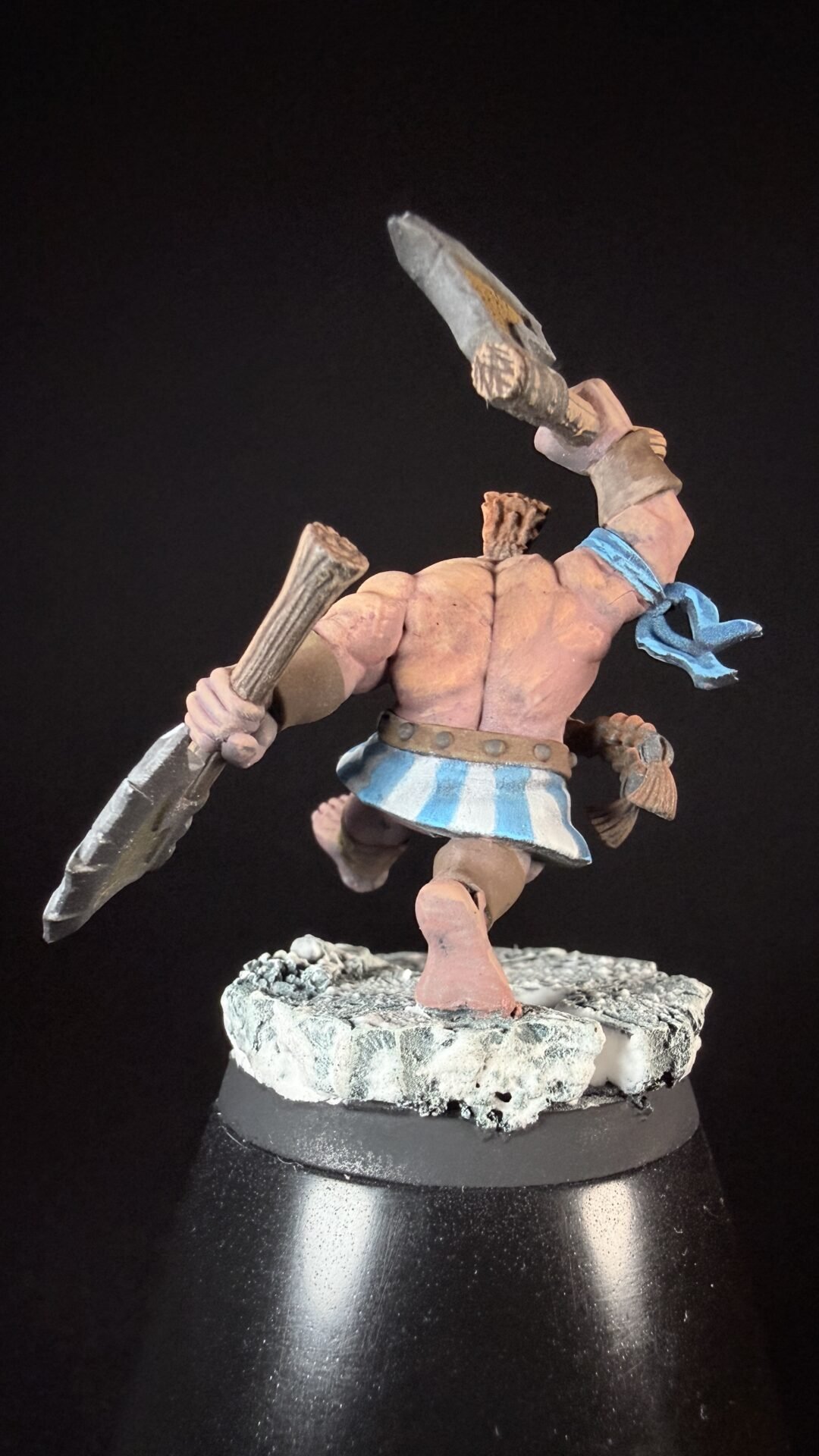
The key area I wanted to focus on here was the skin, because there is a lot on show and wanted to try and really bring it to life. So I started with a pro acrylic flesh base which has a deep red to it and worked up slowly from there. I wanted to keep the light source from the front so I’ve deliberately kept the back of the mini much darker than the front. Then it was just a case of slowly adding highlights.
Now it’s not a work of art but I am very happy with how the skin tone has worked and I’ve learned a lot from painting this guy. Which I’m hoping I can hoping I can keep building on.
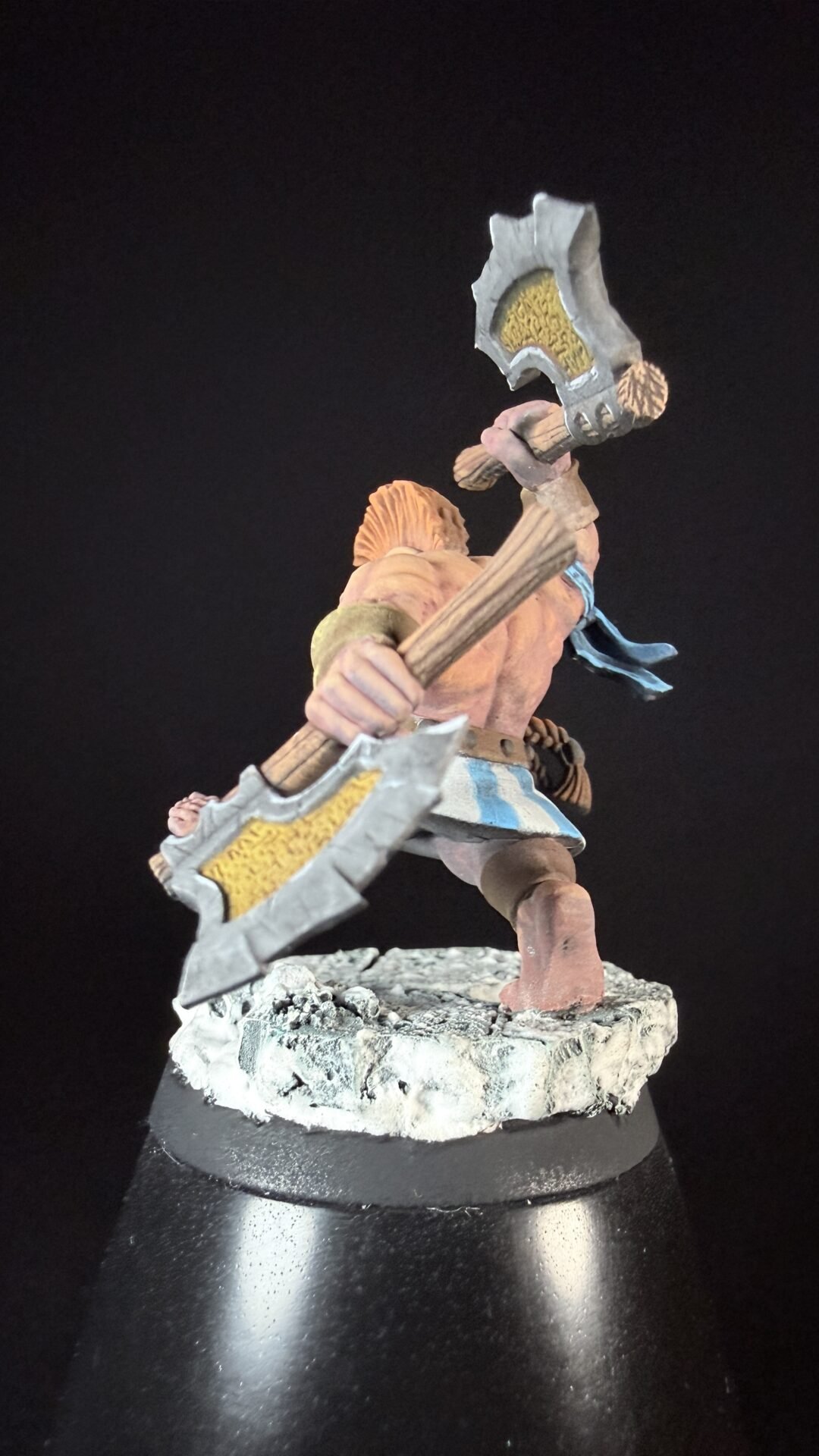
The rest of the model kept to the same idea of the light coming from the front and to give it the Astrix feel I went with the classic blue and white striped trousers. I think they work really well and give a bit of pop to the mini.
He’s a berserker so he has to have a ginger beard. It just wouldn’t be right if he didn’t. The only bit I would call out was that I’ve continued by journey down the non metallic metal road and once again tried this out. In a very light weight way. But I think it looks ok. I’m not conning myself into thinking it is really NMM but it’s’ a little bit better than the last one and I’m taking that as win. Small steps and not beating myself up when it’s not perfect.
But what do you think.
If you like this guy you can find more of my D&D inspired minis in the Gallery.
Tactical deep dive
Welcome back to TerminatorTids, your ultimate digital outpost for tabletop optimisation, lore deep-dives, and character builds that shake the very foundation of the grid map. Today, we are peering beneath the craggy, stone-carved surfaces of Dungeons & Dragons Fifth Edition (5e) via D&D Beyond to dissect a classic archetype with a devastating, under-appreciated mechanical twist: The Dwarf Barbarian Dual-Wielding Twin Hand axes.
When players think of a Dwarf Barbarian, their minds instantly race to the imagery of a massive, heavy-breathing Mountain Dwarf dragging a towering great axe through the dirt. It is a fantastic trope, iconic and undeniably effective. But today, we are casting aside the heavy, slow swings of two-handed weaponry in favour of a relentless storm of flashing steel, flying splinters, and unmatched action economy. We are building the Whirling Hearth-Axe a short, virtually immovable mountain of muscle that transforms the battlefield into a meat grinder through sheer volume of attacks.
In this deep-dive article, we will examine the thematic background that drives this unique warrior, analyse how D&D Beyond’s strict mechanical rules handle dual-wielding hand axes, and map out exactly how to build and pilot this character to dominate the frontlines of your next campaign.
Part 1: The Lore & Character Background
Before we look at the numbers, modifiers, and optimised feats on your D&D Beyond digital character sheet, we must answer a vital question: Who is this person?
In D&D lore, dwarves are typically portrayed as disciplined, lawful traditionalists. They value the tight phalanx, the heavy shield wall, the forge, and the orderly defence of underground strongholds. A barbarian dwarf, then, is a fascinating contradiction. They are an outcast, a chosen protector, or a cultural anomaly.
When you introduce a twin-axe dwarven barbarian, their backstory can lean heavily into these unique cultural friction points:
The Outcast of the Low-Forge
In deep dwarven cities, breaking formation is seen as a betrayal of the clan. A dwarf who gives into the Rage, who drops their shield, steps out of the phalanx line, and charges headlong into a horde of drow or duergar, is terrifying to their peers. Your character might be an exile whose uncontrollable temper made them a liability in the structured military of the under realms, forcing them to take up a life of surface adventuring where their primal fury is appreciated rather than feared.
The Lodge of the Battlerager
If you draw inspiration from Faerûn (the Forgotten Realms), you might belong to the legendary Kuldjargh (“axe-cutters”), commonly known as Battleragers. These are dwarven berserkers who reject traditional armour for spiked suits, drinking themselves into hallucinogenic frenzies before leaping into combat. While the Battlerager is an explicit subclass in D&D Beyond, the concept applies broadly to any dwarf who prefers light, fast, brutal weapon combinations over heavy two-handed weaponry.
Why Twin Handaxes?
Unlike human or elven dual-wielders who rely on elegant short swords or rapiers, a dwarf treats handaxes as extensions of the forge. A handaxe is practical. It splits firewood, clears subterranean cave networks, and collapses goblin skulls with equal efficiency.
Carrying twin handaxes isn’t an artistic stylistic choice; it’s a declaration of endless, utilitarian violence. If one axe gets stuck in the ribcage of an ogre, the second axe is already arcing toward its throat. Furthermore, handaxes possess the Thrown property. A dwarf who carries a bandolier of these heavy iron blades is a threat at arm’s length or across a cavern floor, giving a traditionally slow-moving ancestry a surprise tool for ranged engagement.
Part 2: The Rules of Engagement (D&D Beyond Breakdown)
To build this successfully on D&D Beyond, you must understand exactly how the 5e rules interact with dual wielding and barbarian class features. Many players make fundamental errors here, assuming they need high-tier feats just to pick up two weapons. Let’s break down the core mechanics step-by-step.
The Foundation of Two-Weapon Fighting (TWF)
Under the standard rules found in the D&D 5e Player’s Handbook, anyone can wield two weapons simultaneously as long as both weapons possess the Light property.
Looking up the Handaxe on D&D Beyond reveals its weapon profile:
- Damage: 1d6 slashing
- Properties: Light, Thrown (range 20/60)
- Weight: 2 lbs.
Because the handaxe is inherently Light, our dwarf can naturally hold one in each hand and utilise the Two-Weapon Fighting bonus action rule without needing the Dual Wielder feat.
The Core Rule: When you take the Attack action on your turn and attack with a light melee weapon that you’re holding in one hand, you can use a bonus action to attack with a different light melee weapon that you’re holding in the other hand. You don’t add your ability modifier to the damage of the bonus attack, unless that modifier is negative.
This means at Level 1, your Dwarf Barbarian can make two attacks per turn. For the main hand attack, you deal 1d6 plus your Strength Modifier. For the off-hand attack using your bonus action, you deal a flat 1d6 with no Strength modifier added.
The Barbarian Synergy: Maximising the Rage Flat Bonus
This is where the twin-handaxe build begins to outshine two-handed weapon configurations at early to mid-levels. The Barbarian’s signature feature, Rage, gives a flat bonus to damage rolls that utilise Strength.
At levels 1 through 8, this bonus is +2. At level 9, it scales to +3.
Crucially, the rules for Two-Weapon Fighting state that you do not add your Ability Modifier (Strength) to the off-hand damage roll. However, it does not restrict you from adding class features! Because your off-hand attack is still a melee weapon attack using Strength, you add your flat Rage damage bonus to your off-hand bonus action attack.
Let’s look at the math at Level 2 with a Strength modifier of +3 (+16 on your attribute score) while Raging. Your main-hand attack yields 1d6 + 5 (combining your Strength and Rage), while your off-hand attack lands at 1d6 + 2 (just the Rage bonus). This gives you a total turn output of 2d6 + 7, averaging 14 points of potential damage. Compare this to a standard Mountain Dwarf wielding a Great sword, which averages around 12 points of damage at the same level. By utilising two weapons, you are applying your Rage damage twice per turn, effectively outpacing the raw dice size of heavy weapons in the early tiers of play.
Reckless Attack and Critical Fishing
At 2nd level, Barbarians unlock Reckless Attack. This allows you to gain advantage on all melee weapon attack rolls using Strength during your turn, in exchange for giving enemies advantage on attack rolls against you until your next turn.
For a dual-wielding barbarian, this is pure gold. Advantage significantly increases your chances to hit, ensuring your flat damage bonuses land. More importantly, rolling two d20s for every attack doubles your chances of scoring a critical hit. When you are swinging three times a turn (once you unlock Extra Attack at Level 5), you are rolling six d20s every round. This triggers the Barbarian’s later feature, Brutal Critical, far more frequently than a slow, single-swing build ever could.
Part 3: Character Creation Blueprint on D&D Beyond
When setting up your character creator on D&D Beyond, your specific choice of Dwarven subrace and your attribute allocation will dictate your long-term viability.
Ancestry Choice: Mountain Dwarf vs. Hill Dwarf
                  ┌────────────────────────────────────────┐
                  │          Dwarven Ancestry Options      │
                  └───────────────────┬────────────────────┘
                                      │
             ┌────────────────────────┴────────────────────────┐
             ▼                                                 ▼
┌─────────────────────────┐                       ┌─────────────────────────┐
│      Mountain Dwarf     │                       │       Hill Dwarf        │
├─────────────────────────┤                       ├─────────────────────────┤
│ • +2 Strength / +2 Con  │                       │ • +1 Wis / +2 Con       │
│ • Maximum raw physical  │                       │ • +1 HP per level       │
│   stats for early feats │                       │ • Unmatched health pool │
└─────────────────────────┘                       └─────────────────────────┘
If you are using the classic Player’s Handbook rules on D&D Beyond, Mountain Dwarf is the gold standard for a barbarian. The +2 to Strength and +2 to Constitution perfectly align with your primary attributes.
However, if you are using the updated Rules or customised origin rules from Tasha’s Cauldron of Everything, you can shift those stat allocations anywhere. In that case, Hill Dwarf becomes an incredibly enticing option because of Dwarven Toughness, which grants you an extra 1 hit point per level. Paired with the Barbarian’s d12 hit die and Rage damage resistance, a Hill Dwarf Barbarian is nearly impossible to put down.
Stat Array Optimisation (Point Buy / Standard Array)
Pprioritise your stats on D&D Beyond to favour raw physical power and survivability. Your Mental statistics (Intelligence, Wisdom, Charisma) can be treated as dump stats, though keeping Wisdom at a flat 10 or 12 helps protect against devastating mind-control saves.
- Strength: 15 (+2 Ancestry = 17): Your primary offensive stat. It dictates your hit chance, your main-hand damage, and your ability to shove or grapple enemies.
- Dexterity: 14: Essential for your Unarmored Defence or for capping out the benefits of Medium Armour (like Scale Mail or Breastplate). It also boosts your Initiative rolls.
- Constitution: 15 (+2 Ancestry = 17): Fuels your health pool and your Unarmored Defence.
- Intelligence: 8: Dump stat.
- Wisdom: 10: Kept flat to avoid negative modifiers on critical perception and saving throws.
- Charisma: 8: Dump stat.
Part 4: Subclass Selection & High-Level Synergy
As you scale from Level 1 to Level 20 on D&D Beyond, your choice of Primal Path (Subclass) will dictate how your twin-handaxe play style evolves. Two subclasses stand out as exceptionally powerful matches for this visual concept.
Path of the Zealot (Xanathar’s Guide to Everything)
The Zealot is an unyielding, divinely inspired engine of death. It fits perfectly with a dwarf devoted to an ancient god of the forge or war, like Clangeddin Silverbeard.
- Divine Fury: The first creature you hit on each of your turns takes extra damage equal to 1d6 + half your barbarian level. Because you are swinging multiple times per turn due to dual-wielding, you have a vastly higher probability of ensuring this feature lands every single round, even if your first attack misses.
- Fanatical Focus: Allows you to reroll a failed saving throw once per rage, vital for keeping your dwarf moving forward against crowd control spells.
Path of the Totem Warrior / Wild Heart (Player’s Handbook)
If you prefer to lean into the primal, survivalist aspect of a dwarf from the remote crags and mountains, the Totem Warrior is the ultimate defensive chassis.
- Bear Totem (Level 3): While raging, you gain resistance to all damage types except psychic. When combined with the high health pool of a dwarf, you become a walking bunker. Because you don’t use a shield (allocating both hands to your axes), the Bear Totem compensates for your slightly lower Armour Class (AC) by halving all incoming physical and magical damage.
Part 5: Tactical Execution in Combat
Operating a dual-wielding barbarian requires keeping a close eye on your Action Economy. D&D 5e restricts you to a single Bonus Action per turn, which creates a tactical puzzle during the opening round of any combat encounter.
The Round One Dilemma
To activate your Rage, you must spend a Bonus Action. Because Two-Weapon Fighting also requires your Bonus Action to execute the off-hand attack, you cannot attack with your twin handaxes on the same turn that you enter a Rage.
An optimised combat flow looks like this:
- Round 1:
- Bonus Action: Enter a Rage.
- Movement: Close the distance to the enemy frontline.
- Action: Take the Attack action. At Level 5+, this grants you two attacks with your main-hand handaxe, with each hit applying your full Strength and Rage bonuses.
- Round 2 and Beyond:
- Action: Take the Attack action (Two attacks with your main hand, using Reckless Attack for advantage).
- Bonus Action: Execute the off-hand attack with your second handaxe (One attack, adding Rage damage but omitting Strength).
The Handaxe Advantage: The “Pocket Rocket” Strategy
Never forget that your handaxes can be thrown. If you encounter an enemy flying 20 feet in the air or running away across a chasm, a two-handed great axe barbarian is completely neutralised.
Your dwarf, however, can simply hurl their main-hand axe, draw another one as part of their movement/interaction, and keep up the pressure. It keeps your Rage active even when you can’t physically stand next to your foe, preventing your core mechanic from dropping prematurely.
While traditional builds might rely heavily on massive, singular two-handed swings, opting for the twin axes gives you an incredible combination of high hit consistency, constant critical-hit tracking via sheer volume of attacks, and fantastic ranged flexibility. Log onto D&D Beyond, pick up your iron blades, and let the embers of the hearth fire guide your blades!
The Wrap Up
That’s all I have for you this week. I have a busy weekend ahead of me. It’s my nieces birthday today so we will be taking presents round then she has a party and a sleepover with some of her friends for the rest of the day. We will then be hading out of a mini local festival where a friend ours son is the main DJ so I’m looking forward to it.


You May Also Like
Weekly Waffle #234
Weekly Waffle #237