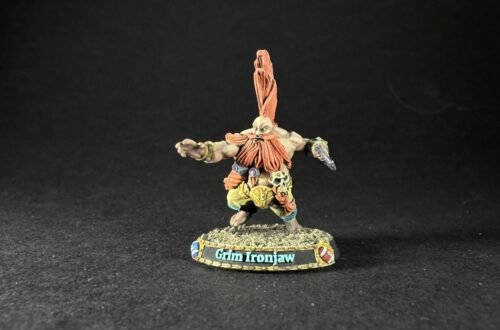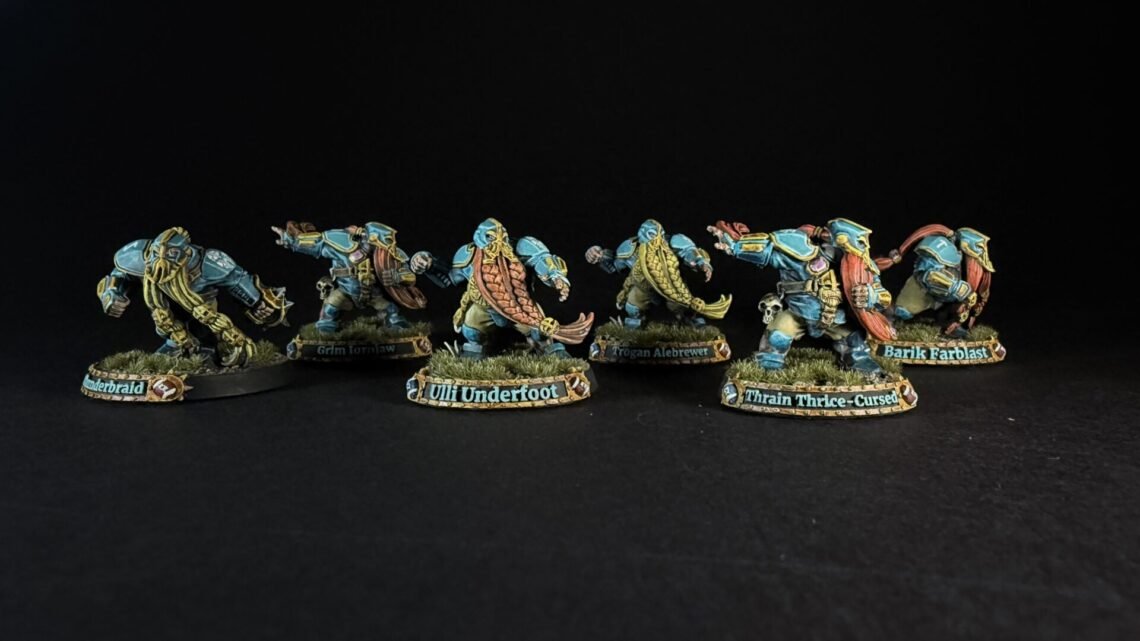
The Dwarf Lineman – The Grumpy, Unmovable Meatloaf
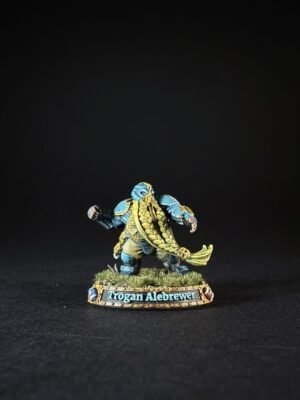
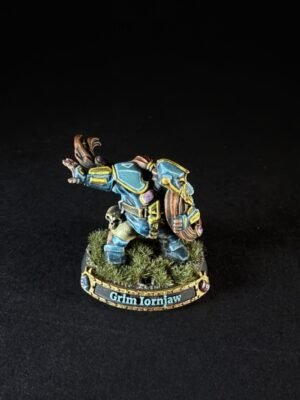
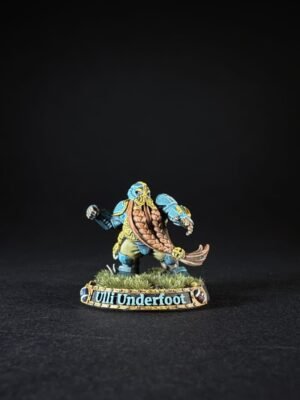
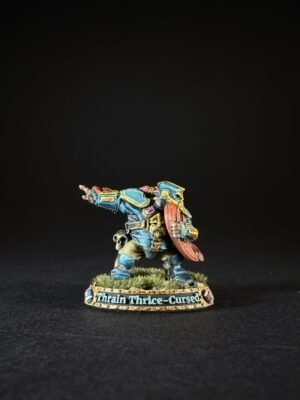
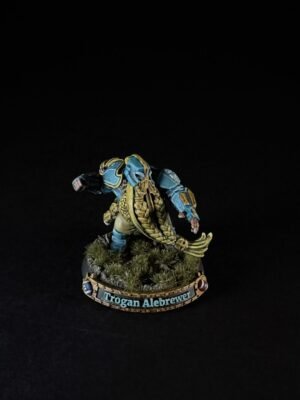
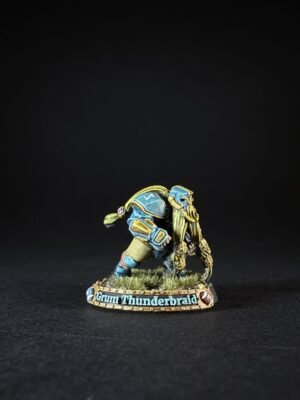
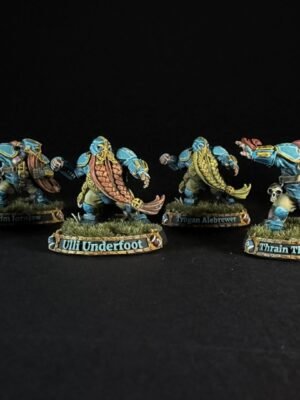
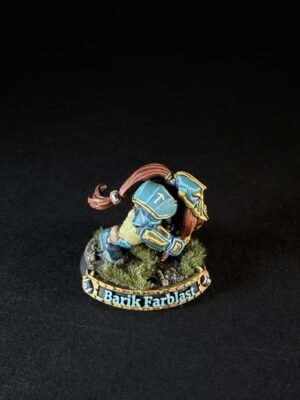
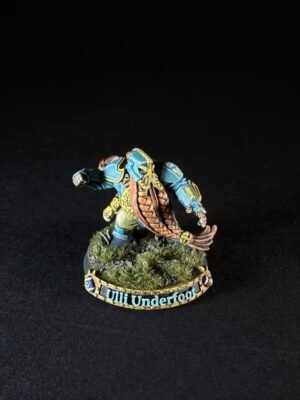
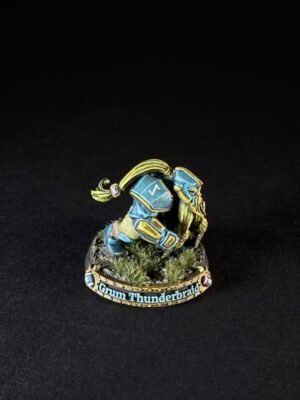
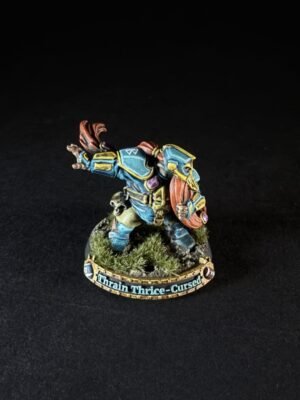
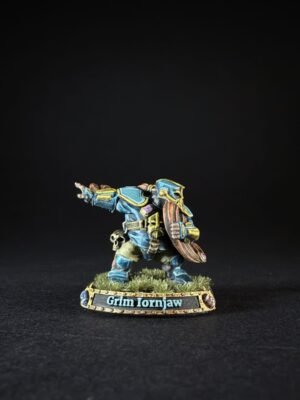
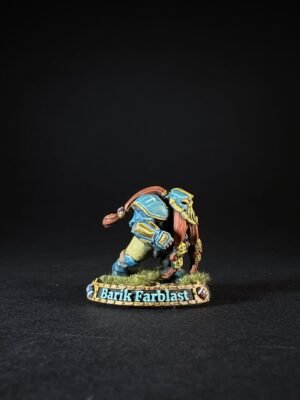
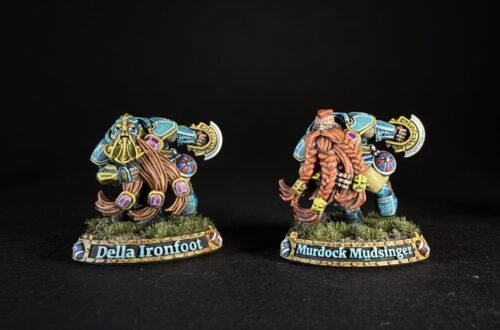
Welcome back to the Chronicles here at TerminatorTids! Pull up a sturdy bench, preferably one reinforced with iron bands, and pour yourself a double measure of the finest Bugman’s XXXXXX. Today, we are heading deep into the mountain vaults to talk about the literal foundation of the most stubborn, resilient, and occasionally infuriating faction to ever grace the gridiron. We’re talking about the Dwarf Lineman, or as the official scrolls call them, the Longbeards.
Now, if you’ve ever played Blood Bowl, you know the feeling of looking across the Line of Scrimmage and seeing a row of these stout fellows. It’s like looking at a stone wall that has decided it doesn’t like your face and has spent the last three hundred years stewing over it. The Dwarf Lineman isn’t just a player; he’s a geological event in a helmet.
The Weight of History: Why They’re So Grumpy
Before we get into how they bash heads on the tabletop, we have to talk about where these lads come from. In the lore of the Old World, Dwarfs don’t do anything halfway. If they build a door, it stays shut for a millennium. If they brew a beer, it’s thick enough to use as mortar. So, when they discovered Blood Bowl, they didn’t just play it; they codified it into their culture of grudges and craftsmanship.
The Dwarf Lineman is usually an older member of the clan. In Dwarf society, your beard length is essentially your CV. A Longbeard has seen it all, goblin invasions, cave-ins, and the tragic shortage of hops in 2492. They bring that “seen-it-all” attitude to the pitch. They aren’t there for the fame or the cheerleaders. They’re there because their Hold’s honor is at stake, and by Grungni, no pointy-eared Elf is going to prance past them without paying a physical toll.
Every Lineman carries a literal or metaphorical Book of Grudges. If an Orc blackens their eye in the first half, that Orc’s name is being etched into the back of a shield. The game becomes a methodical process of crossing those names off.
This deep-seated cultural stubbornness is why they never back down. To a Dwarf Lineman, “retreating” is just a fancy word for “being wrong,” and Dwarfs are never wrong.
The Tactical Bedrock: Standing Your Ground
When you transition from the stories to the actual tabletop, the Dwarf Lineman is the gold standard for reliability. In a game governed by the fickle whims of Nuffle, where a triple skull roll can end your career in a heartbeat, the Dwarf Lineman is the safety net.
The first thing any coach notices is that these guys come with the “Block” skill straight out of the box. Do you realize how incredible that is? Most teams have to spend half a season and a mountain of gold training their players not to fall over when they hit someone. Dwarfs are born with the innate knowledge of how to throw a punch. This makes them the ultimate “safe” players. When a Dwarf Lineman goes in for a block, you can breathe a little easier knowing they aren’t going to knock themselves out on a “Both Down” result.
But it’s not just about hitting; it’s about staying upright. With an Armor Value that would make a battle tank jealous, these guys are notoriously hard to remove from the pitch. You don’t “clear” a Dwarf line; you slowly erode it, like wind against a mountain. And even when you do manage to break through that thick plate, you have to contend with “Thick Skull.” This rule is the mechanical version of a Dwarf being too angry to realize he’s concussed. They have a nasty habit of shaking off hits that would put a Human in the infirmary for a month.
Mastering the Art of the Grind
Playing with Dwarf Linemen requires a specific mindset. You have to embrace the “Grind.” You aren’t going to outrun anyone. In fact, most of the players on the pitch could probably beat a Dwarf Lineman in a race while hopping on one leg. But you don’t need to be fast if you control the space.
The Lineman’s job is to create a “Tackle Zone” of pure misery. Because they also come with the “Tackle” skill, they are the natural predators of the “Agility” teams. You know those slippery Wood Elves or Skaven who think they can just dodge away on a 2+? Not against a Longbeard. The “Tackle” skill strips away their “Dodge” protection, turning a graceful escape into a face-plant in the mud.
Think of your Linemen as the anchors of a giant net. You spread them out, you lock the enemy into combat, and you refuse to let go. It’s a claustrophobic style of play. You’re essentially telling your opponent, “You’re staying here with me until I’m done hitting you.” It’s not flashy, and it won’t win you any “Most Entertaining Team” awards, but it wins games by sheer attrition.
Positioning: The Chess Match of Stone
On the board, positioning your Linemen is an art form. Since they move at the speed of a tectonic plate, a mistake in positioning on Turn 2 can haunt you until Turn 8. You have to think ahead. You aren’t reacting to where the ball is now; you’re reacting to where the ball will be in three turns.
A classic Dwarf strategy involves the “Cage”—a tight square of players protecting the ball carrier. The Linemen are the walls of this cage. Because they are so hard to knock down, the cage becomes an unstoppable force of nature. If you’re playing against Dwarfs, trying to break that cage feels like trying to punch a hurricane.
However, the real secret to using Linemen effectively is knowing when to let them be bait. Sometimes, you leave a Lineman in a dangerous spot just to tempt your opponent into committing too many players to knock him down. While three Orcs are busy failing to hurt one stubborn Dwarf, the rest of your team is methodically dismantling the Orcs’ defense elsewhere.
The Joy of the Grudge
There is a unique kind of satisfaction that comes from coaching these bearded bastions. There’s a joy in watching an opponent’s high-flying, expensive superstar get marked by a basic Dwarf Lineman. You can see the frustration on the other coach’s face as they realize their hundred-thousand-gold-piece player is stuck in a wrestling match with a guy who cost half as much and refuses to fall over.
The Dwarf Lineman embodies the spirit of “Consistency over Flashiness.” They are the players who do the dirty work in the rain, on the line of scrimmage, taking the hits so that the Blitzers and Runners can take the glory. They are the ones who hold the line when the game is on the line, and they do it with a grimace and a grunt.
In the lore, every successful block is a point of pride for the clan. On the tabletop, every turn they stand their ground is a step toward victory. They remind us that while Blood Bowl is a game of skill and luck, it’s also a game of character. And no one has more character, or more facial hair, than the Dwarf Lineman.
Bringing the Mountain to the Pitch
If you’re looking to start a Dwarf team, or if you’re looking to refine your play, never underestimate these “basic” players. They are the soul of the faction. They aren’t just there to fill out the roster; they are the reason the team works. They provide the stability that allows the more specialized players to function. Without the Lineman, the Slayer has no cover, and the Runner has no path.
So, the next time you’re painting up your squad or lining up for kick-off, give a little nod of respect to your Longbeards. They’ve traveled from the deepest holds, carrying the weight of their ancestors and the sturdiness of the earth itself, just to make sure that for at least one afternoon, no one gets past that center line.
They are the wall. They are the mountain. They are the Dwarf Linemen. And they’ve got a very long list of names in their book, so you’d better hope yours isn’t one of them. Now, let’s get another round of drinks in, I think I hear the referee’s whistle, and there’s a group of Goblins over there that haven’t been hit nearly enough yet! Keep your beards long and your armor thick, and we’ll see you on the pitch!
You can find more Blood Bowl pictures here


You May Also Like
Obulus – Master of Strings
The Dwarf Blitzer – The Bearded Batteringram of the Blood Bowl Pitch